
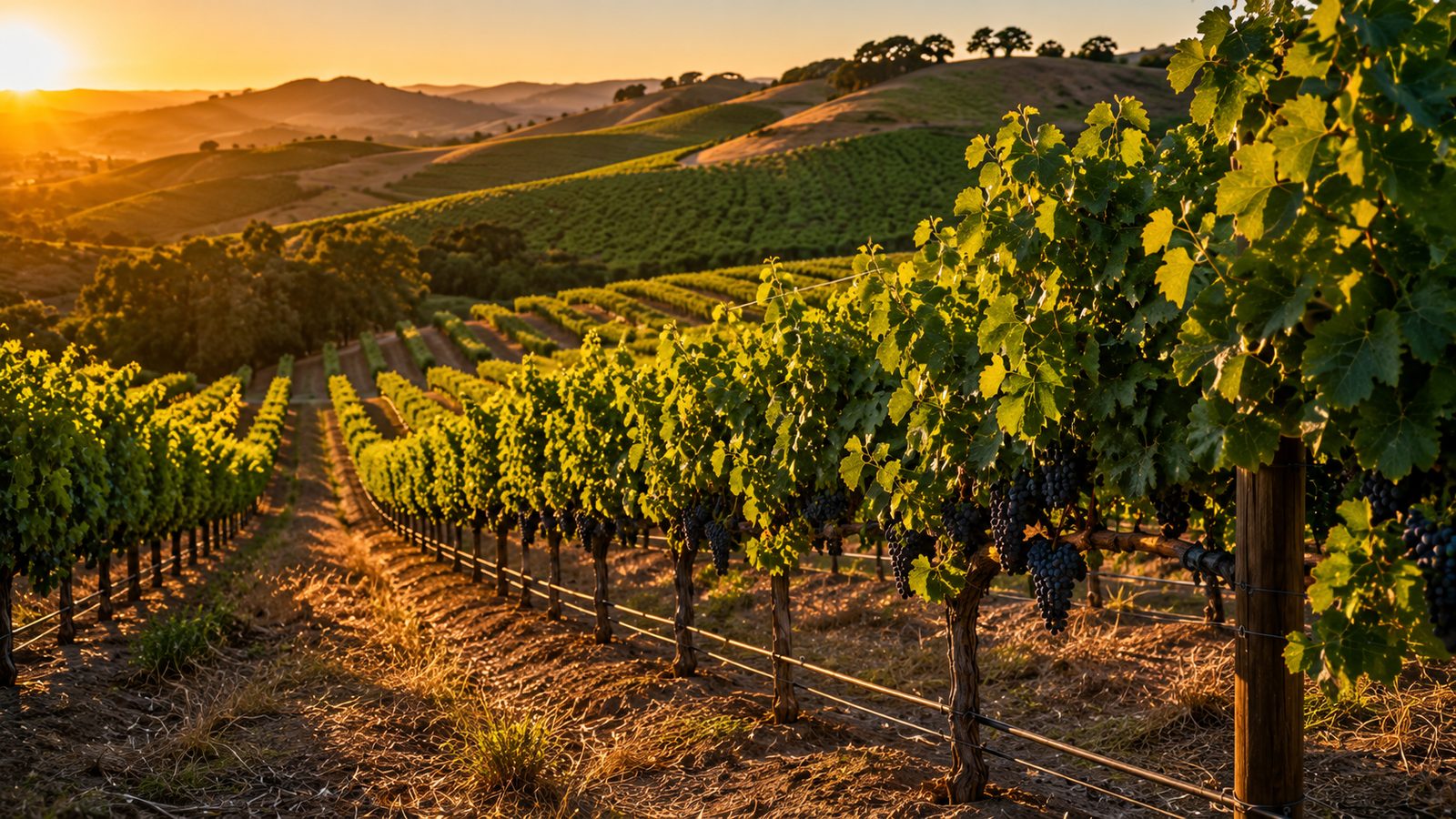
ROS Increases Vineyard Yield by 49%
An independent 2023 field study by Sawtooth Ag Research (Steven Deitz, Selma, CA) on mature French Colombard grapevines, using foliar JC 9465.
Foliar JC 9465 raised harvestable yield 49% on mature French Colombard grapevines in a 2023 Sawtooth Ag Research field study in Selma, California. Four applications at 390 mg/L across the growing season lifted clusters per vine from 60 to 73 and cut sour rot in half, with a companion soil-irrigation route at 78 mg/L.
Last updated 26 September 2026
The Problem
What was the vineyard facing?
Growers face two linked pressures at once: pushing harvestable yield higher while holding back late-season disease. Sour rot in particular can strip a meaningful share of a wine-grape crop just as it ripens, and conventional inputs rarely raise yield and suppress disease from the same application.
To test whether Jenfitch's reactive-oxygen-species (ROS) chemistry could do both, Sawtooth Ag Research ran a controlled 2023 field study on a mature, six-year-old block of French Colombard in Selma, California.
The Program
How did Jenfitch treat the vines?
JC 9465 releases reactive oxygen species that support plant vascular flow while oxidizing pathogens on contact. The study applied it two ways — foliar spray and soil-irrigation drench — over four timed applications through the growing season.
- Foliar application at 390 mg/L — the treatment that produced the headline yield gain.
- Soil-irrigation application at 78 mg/L as a companion delivery route.
- Four applications across the season: April 26, May 18, June 16, and July 14.
- Increased xylem and phloem flow supported heavier, healthier fruit set.
The Data
What were the results?
| Metric | Control | Foliar JC 9465 | Change |
|---|---|---|---|
| Harvestable yield | Baseline | +49% | +49% |
| Clusters per vine | 60 | 73 | +13 clusters |
| Sour rot | Baseline | −50% | Cut in half |
More fruit, less rot, one program
The foliar treatment increased harvestable yield by 49%, raised clusters per vine from 60 to 73, and cut sour rot by 50% — all from four applications of a chemistry that leaves no flavor change and reverts to mild mineral-oxide by-products below FDA limits.
Trial Design
How was the trial run?
The study was carried out by Sawtooth Ag Research under Steven Deitz in Selma, California, during the 2023 season, on a mature six-year-old block of French Colombard. Using established vines rather than a new planting matters: yield on a six-year-old block is settled, so a change over a single season is attributable to the treatment rather than to the vines simply maturing.
Four applications were made across the growing season — April 26, May 18, June 16, and July 14 — timed to the vine's development rather than to a fixed calendar interval. Two delivery routes were compared: soil irrigation at 78 mg/L and foliar spray at 390 mg/L. The foliar route produced the stronger response.
Yield was measured by cluster count. Control vines carried 60 clusters per vine; foliar-treated vines carried 73. That is the arithmetic behind the 49% increase in harvestable yield, and it is a count rather than an estimate.
Interpretation
Two effects, not one
The trial recorded two outcomes that are worth separating, because they come from different mechanisms.
The first is the yield gain. Observations during the trial pointed to increased flow through the xylem and phloem — the vine's water and nutrient transport tissue. Where that transport is partially obstructed, the vine is running below its capacity regardless of how well the block is irrigated or fertilised. Clearing the obstruction lets existing inputs do more work, which is consistent with a yield response on vines that were already well managed.
The second is the 50% reduction in sour rot. Sour rot is a late-season microbial complex rather than a single organism, which is why it responds poorly to narrowly targeted fungicides. Reactive oxygen species are not selective in that way: hydroxyl radicals attack cell structure directly, so the mixed population is treated as one problem. The same non-selectivity is why the chemistry shows up across unrelated crop diseases — citrus greening, Xylella fastidiosa in olives, and Bakanae in rice.
Because JC 9465 is USDA NOP organic certified under 7 CFR Part 205, both routes are available to certified organic growers. Across Jenfitch agricultural trials, crop-yield gains have run in the 30–60% range, and this vineyard result sits inside that band rather than above it.
Documentation
Read the full study
Related: Agricultural research · Mineral Oxychloride Technology
Frequently Asked Questions
About this vineyard study.
How much did yield actually improve?
In the 2023 Sawtooth Ag Research study on mature French Colombard, the foliar JC 9465 treatment increased harvestable yield by 49%, raised clusters per vine from 60 to 73, and cut sour rot by 50%. The study was run independently by Steven Deitz on a six-year-old block in Selma, California, comparing treated vines against an untreated control across the same growing season.
What was the application program?
Four applications across the season (April 26, May 18, June 16, July 14). Foliar was applied at 390 mg/L and soil-irrigation at 78 mg/L. The foliar route produced the headline yield gain. Both routes delivered the same JC 9465 reactive oxygen species chemistry, which supports vascular flow while oxidizing pathogens on contact, and the study reported increased xylem and phloem flow through the treated vines.
Does treatment change flavor or leave residue?
No. JC 9465 works by generating reactive oxygen species that oxidize on contact and then revert to mild mineral-oxide by-products below FDA limits, so it extends quality without altering taste. The oxidation happens where the chemistry contacts the fruit and vine surfaces, and what remains afterward is mineral oxide rather than a persistent residue, which is why the same product is used in certified-organic operations.
Is JC 9465 approved for organic growing?
Yes. JC 9465 is EPA FIFRA registered (2020) and USDA NOP organic certified (2021, 7 CFR Part 205), so it can be used in certified-organic operations. That covers both the foliar spray and the soil-irrigation drench used in the Sawtooth Ag Research vineyard study. JC 9465 and JC 9450 are the same chemistry carried on two different registration paths, which is why their certifications differ.