

Industries We Serve
One ORP-controlled chemistry platform, tuned to the water problems of four very different industries.
Jenfitch serves four industries: municipal and utilities, industrial and cooling towers, food and agriculture, and oil and gas. All four run on the same mineral oxychloride platform, which delivers a 2.8 to 2.9 V oxidation potential from a stable liquid. What changes is the ORP setpoint each program is dosed to.
Built Around Your Problem
The right program for your water, backed by full-scale results.
Jenfitch has spent more than a decade solving the water problems conventional chemistry struggles with — pulling dissolved metals below discharge limits, destroying biofilm that shrugs off chlorine, breaking oily emulsions, and disinfecting produce without changing taste. The same mineral oxychloride platform sits behind all of it, but every industry uses it differently.
What stays constant is the mechanism. Mineral oxychloride chemistry delivers a 2.8–2.9 V oxidation potential — above ozone, and far above chlorine — from a stable, pourable liquid rather than a gas that has to be generated and dissolved on site. Because the oxygen atoms are weakly bound, they release on contact with organics, inorganics, and microorganisms instead of dissipating on a fixed half-life. That is why the same reagent can hold a protective residual in a mussel-fouled intake, strip H₂S out of a scrubber loop, and sit inside a produce wash line at food-contact dose rates.
What changes is the control strategy. Every Jenfitch program is dosed to an oxidation-reduction potential setpoint rather than a fixed ppm, because ppm tells you what you fed and ORP tells you what you achieved. A cooling tower held at +400 to +500 mV is doing biofilm and MIC control; the same chemistry at +650 to +750 mV is running a disinfection barrier. The dose follows the demand, so seasonal load swings, organic surges, and pH drift do not quietly leave a system under-treated.
These industry pages pull together the specific problems, treatment programs, products, and proven field results that matter to your operation. If you already know your industry, pick it below. If you are working backwards from a symptom, start with the table underneath.
Choose Your Industry
Four industries, one proven platform.
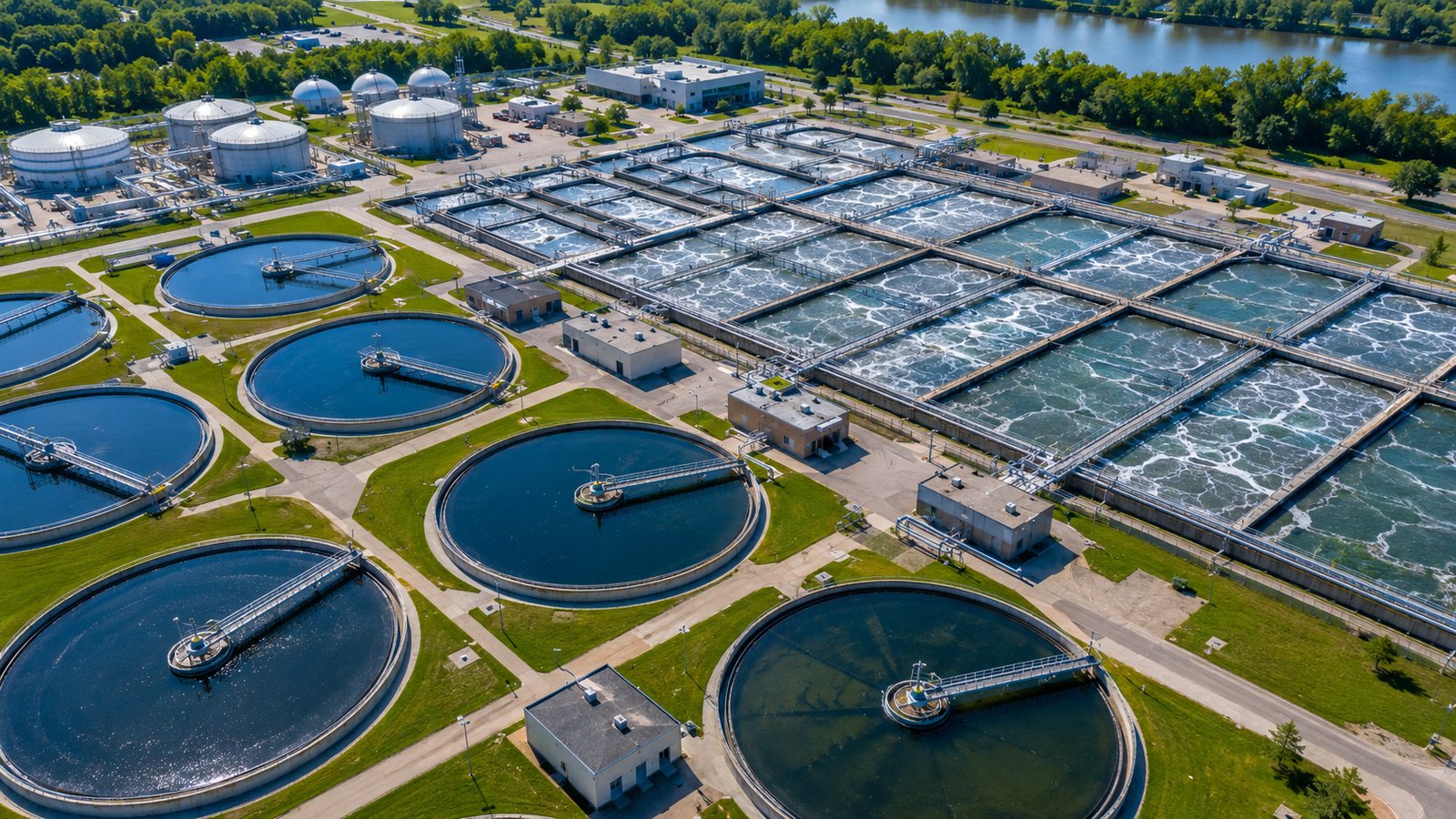
Municipal & Utilities
Dissolved-metal removal below discharge limits, THM/DBP reduction, ozone-system enhancement, potable clarification, and digester scale control.
Explore industry
Industrial & Cooling Towers
Single-chemical control of biofilm, algae, scale, corrosion, and Legionella in cooling towers — plus wet-scrubber H₂S and mussel control.
Explore industry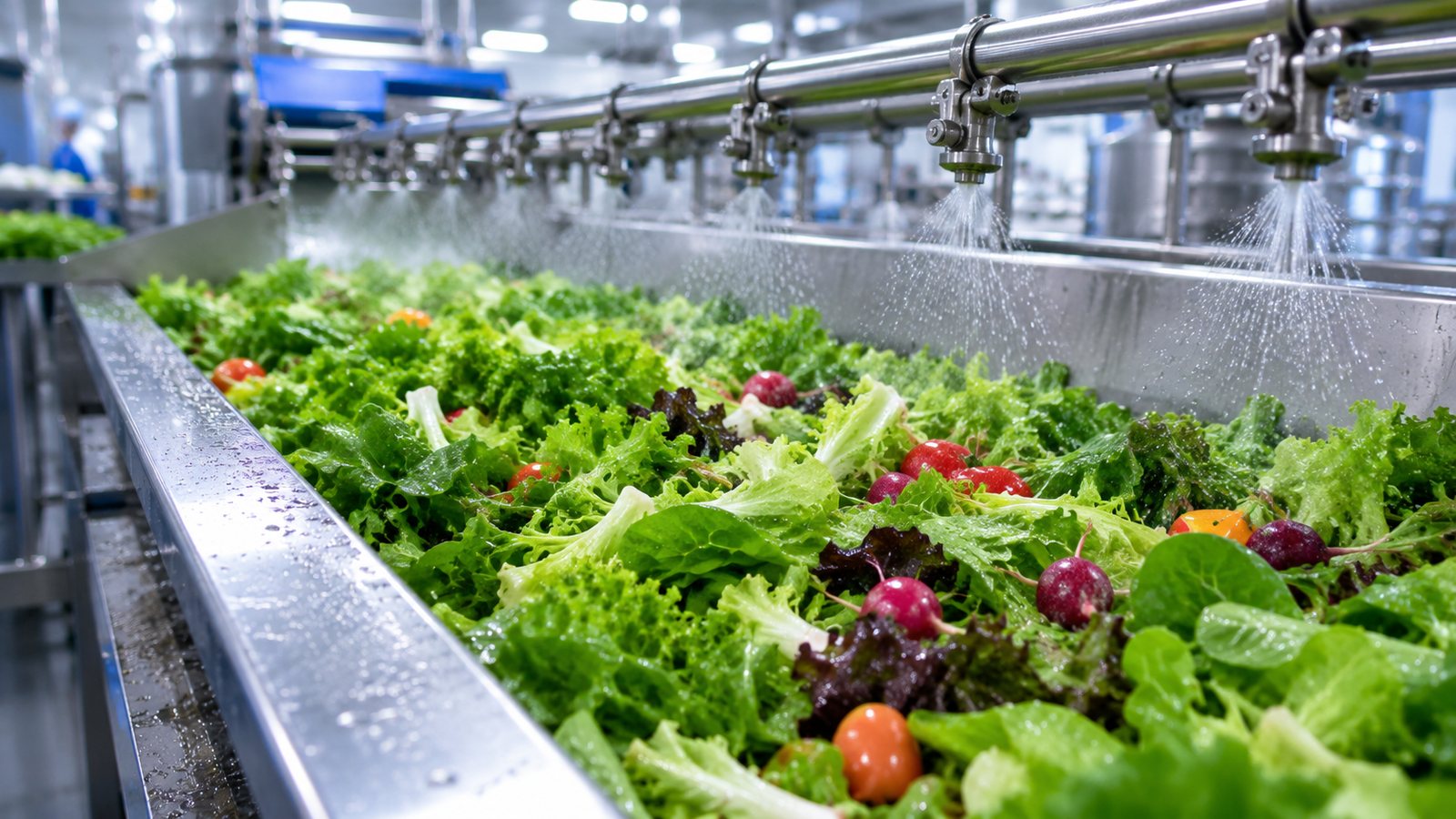
Food & Agriculture
EPA- and USDA-Organic-approved post-harvest disinfection, crop-disease control, higher yields, and shelf-life extension without taste change.
Explore industry
Oil & Gas
Stripper-well output gains, H₂S and iron-sulfide elimination, paraffin control, and produced-water treatment with a lasting residual.
Explore industryStart With The Symptom
Which program fits your problem?
Most people arrive here describing what they can see, not what chemistry they need. Work across the row: what you are looking at, what is actually driving it, the program that addresses it, and the study that documents the result.
| What you're seeing | What's driving it | Program | Proof |
|---|---|---|---|
| Effluent copper or zinc over the NPDES limit | Chelated dissolved metals that resist hydroxide precipitation | Metal removal — JC 9830 + JC 1687 | 94% copper removal, full-scale trial |
| THMs and DBPs creeping toward the regulatory ceiling | Conventional disinfectant reacting with natural organic matter | Ozone-class oxidation — JC 9450 | Goleta Water District pilot study (PDF) |
| Turbidity and solids that will not settle | Particle charge keeping fines in suspension | Coagulation & flocculation — JC 1687 | New coagulant case study (PDF) |
| Scale fouling digesters, pumps and dewatering gear | Struvite and vivianite — magnesium-ammonium-phosphate and iron-phosphate | Struvite & vivianite control | Municipal & industrial research |
| Slime on heat-transfer surfaces, efficiency falling | Biofilm — worse for heat transfer than calcium-carbonate scale, and a shield for MIC | Cooling-water biofilm program — JC 9465 | Is biofilm affecting your process? (PDF) |
| A positive Legionella culture in a tower | Roughly 90% of Legionella lives inside biofilm, where it resists routine chlorination | ORP-controlled disinfection above +700 mV | 6-log reduction in under 10 seconds |
| Rotten-egg odor and H₂S in a scrubber exhaust | Sulfide in the gas stream that conventional chemistry knocks down inconsistently | Wet-scrubber H₂S program | 2,000 mg/L H₂S eliminated at $0.0040/lb |
| Mussels colonizing intakes and piping | Zebra and quagga larvae in raw water — ozone dissipates too fast to hold a residual | Intake & raw-water control — JC 9465 | Zebra mussel application report (PDF) |
| Wash water losing its kill part-way through a shift | Organic load consuming the oxidant faster than a fixed ppm feed replaces it | Post-harvest wash & hydro-cooling | Listeria on green apples study (PDF) |
| Disease pressure eroding harvest year after year | Citrus greening, Xylella fastidiosa, Bakanae and similar vascular pathogens | Foliar & irrigation ROS program | Citrus greening field results |
| Sour rot and low cluster counts on a mature planting | Constrained xylem and phloem flow capping what the vine can carry | Yield & quality program | +49% harvestable yield, −50% sour rot |
| A stripper well stuck at 1–2 bbl/day | Paraffin, asphaltene and iron-sulfide deposition choking the wellbore | Downhole ROS treatment | +72% output, side-by-side comparison |
Not sure which row is yours? Send us your water data · browse every treatment program · or read the full document library.
One Platform, Four Jobs
How does one chemistry fit four industries?
Municipal & utilities work is mostly compliance work. The pressure comes from a permit number, and the chemistry has to hit it repeatably on water that changes with the weather. That means two different jobs running side by side: precipitation and settling to pull dissolved metals and solids out, and oxidation to handle organics, odor and disinfection by-product precursors before they become a reportable exceedance. The economics matter as much as the chemistry — one utility used JC 9450 to enhance an existing ozone system rather than replace it, avoiding a capital project valued above $20MM.
Industrial & cooling work is mostly biofilm work, whatever the presenting complaint is. Lost heat transfer, pitting corrosion, a Legionella positive, and a mussel-fouled intake are four symptoms of the same underlying condition: a protected microbial layer that routine chlorination cannot reach. A single ORP-controlled reagent replaces the biocide, the dispersant and the secondary oxidant, which is why the operating story here is usually consolidation — fewer products, fewer feed systems, one measured setpoint. Southern California Edison has cited electricity savings above 20% from keeping those surfaces clean.
Food & agriculture work is governed by what you are allowed to put on the crop. JC 9465 is EPA-registered and USDA-Organic approved, which is what makes the same reagent usable in a post-harvest wash line, in a hydro-cooler, through irrigation, and as a foliar application. The kill is fast enough for a wash line — a 6-log CFU reduction on E. coli, Listeria and Salmonella in under ten seconds — and it leaves no taste change, which is the constraint that eliminates most alternatives before dose rates are even discussed.
Oil & gas work is dominated by residual. A treatment that flashes off cannot reach a wellbore or hold through a produced-water loop, so the differentiator downhole is persistence rather than peak oxidation strength. The same property that lets the chemistry keep working on paraffin, iron sulfide and downhole biofilm also handles H₂S in the gas stream and emulsion breaking on the water side — in one side-by-side comparison, at under $100/day to lift a well from 1–2 to 15 bbl/day.
If your operation crosses two of these — a food plant with a cooling tower, a refinery with a discharge permit — that is normal, and it is the argument for a single platform. Tell us what you are treating and we will map it to a program and the studies behind it.
Approved & validated
 EPA FIFRA
Registered
 USDA Organic
Certified
 NSF/ANSI
Standard 60