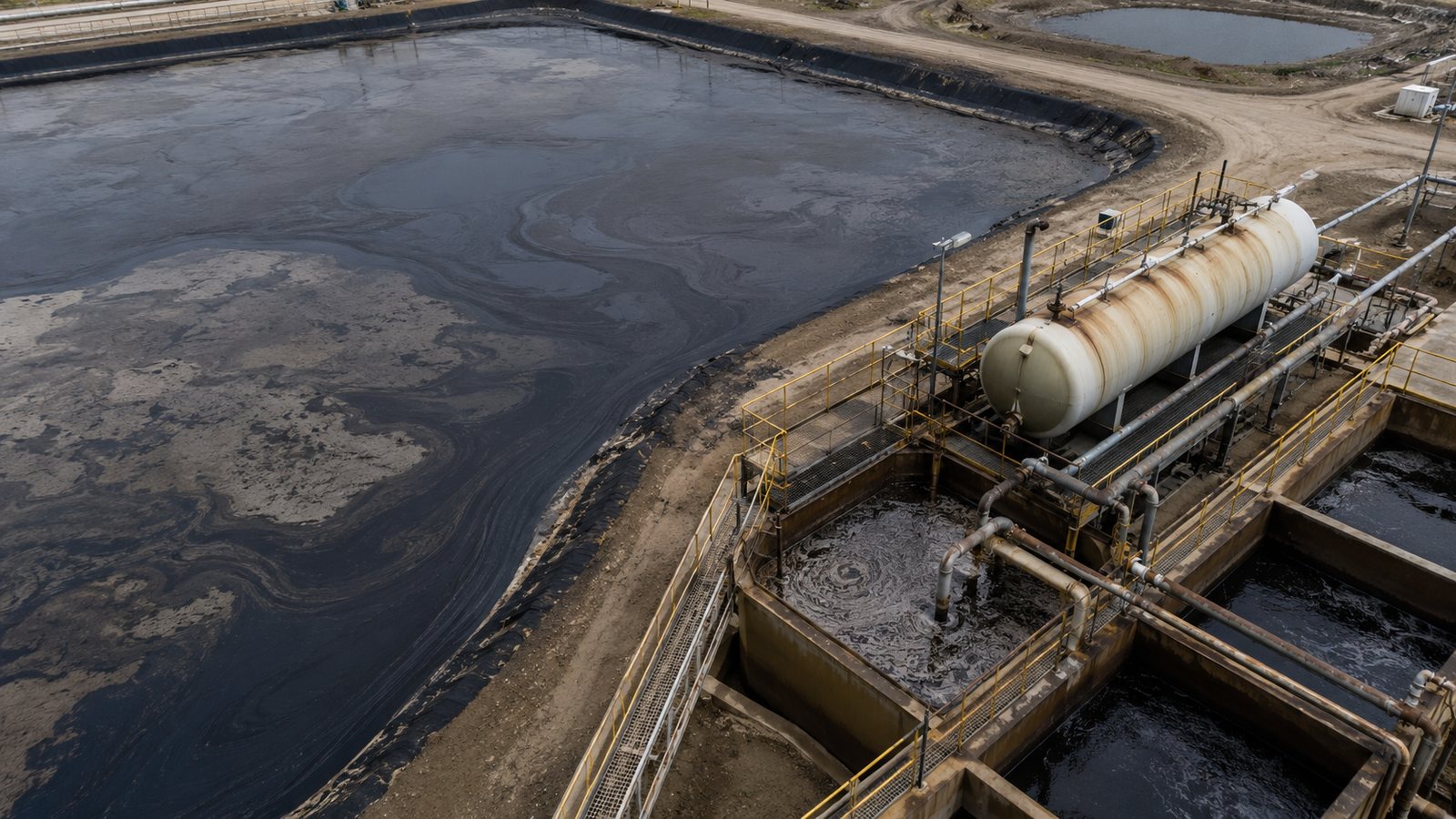
Oily Wastewater
Combines adsorption and liquid/solid separation to treat oil- and grease-laden wastewater to reusable or dischargeable quality.
Learn more
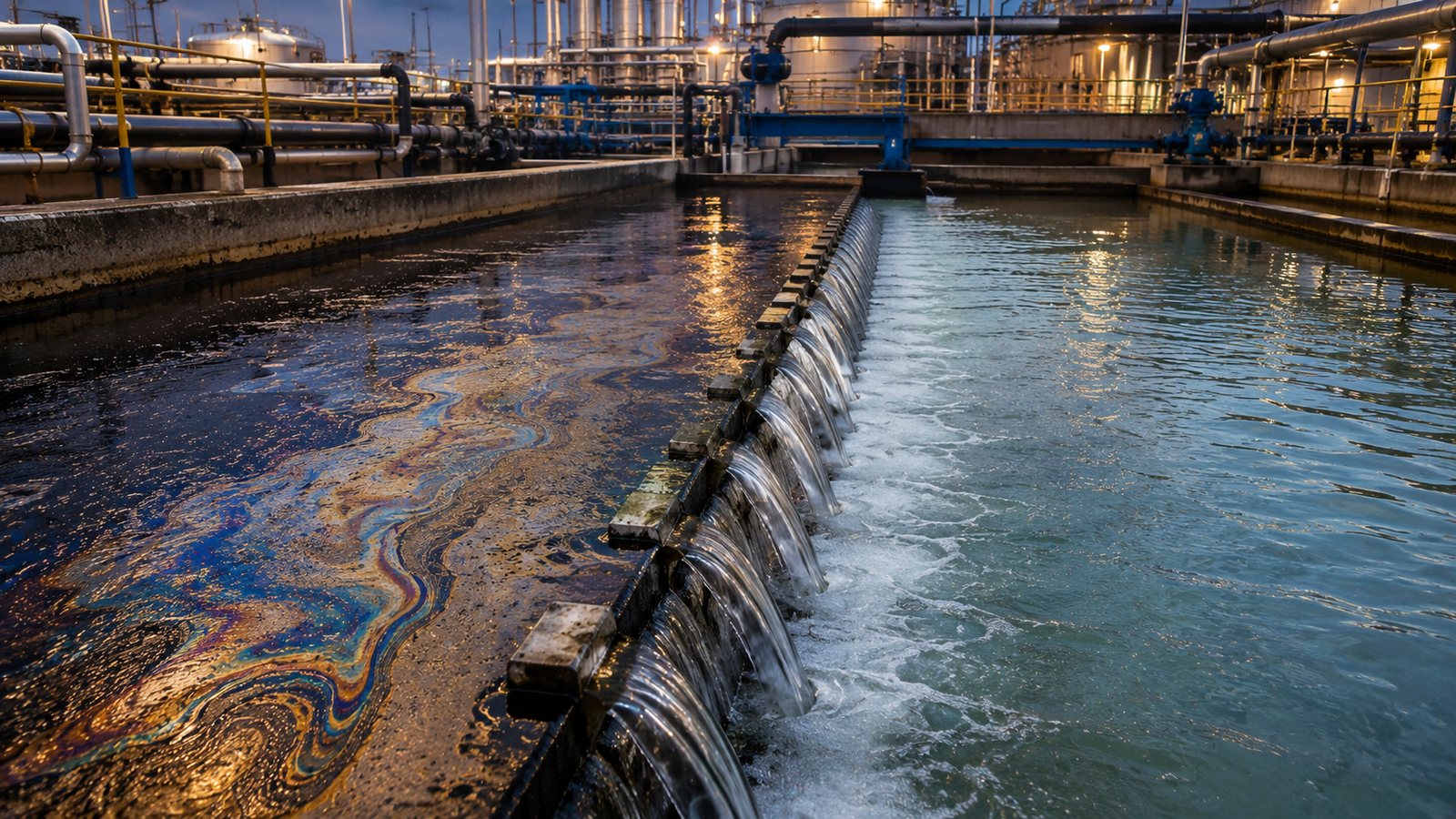
Adsorption media that pulls oil, grease, and hydrophobic organics out of water — combined with liquid/solid separation to treat streams conventional methods cannot handle economically.
Organo-clay is a naturally occurring clay whose surface has been organically modified to attract hydrophobic compounds, so oil, grease and other water-insoluble organics adsorb onto the media as water passes through. Because removal is adsorption rather than filtration, it captures emulsified and dissolved hydrocarbons that a screen or skimmer would miss.
Approved, certified & independently validated
 EPA FIFRA
 USDA Organic
 NSF/ANSI
The Technology
Organo-clay is a naturally occurring clay whose surface has been organically modified so that it strongly attracts hydrophobic compounds — oil, grease, and other organics that do not dissolve in water. As contaminated water passes through the media, those compounds adsorb onto the clay and are held there, while the clarified water passes on.
Because the removal mechanism is adsorption rather than filtration alone, organo-clay captures emulsified and dissolved-phase hydrocarbons that a simple screen or skimmer would miss. Jenfitch combines the adsorption media with coagulation and flocculation and liquid/solid-separation chemistry, so suspended solids drop out in the same program — a two-stage approach for streams where filtration or skimming falls short.
Organo-clay is most valuable as a polishing and pretreatment step — ahead of granular activated carbon or membranes, where a slug of oil would foul or blind the downstream media. It protects and extends the life of that more expensive equipment.
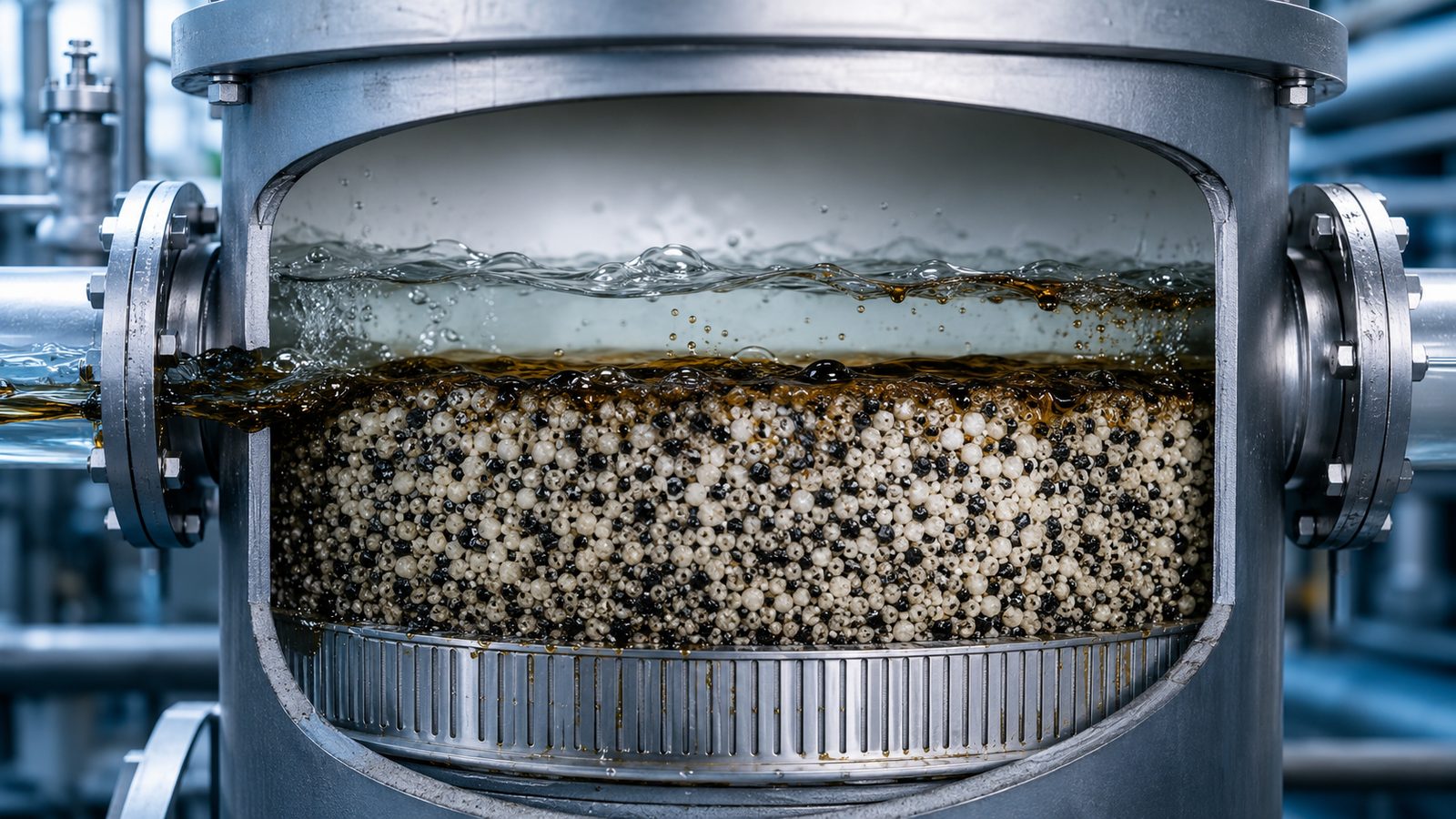
Organo-clay media are engineered to absorb oil, grease, and hydrocarbons while our coagulation and separation chemistry drops out suspended solids — a two-stage approach for streams where simple filtration or skimming falls short.
The Hard Streams
Oily wastewater, produced water, and lagoon water carry contaminants that resist conventional treatment. Free oil skims, but emulsified and dissolved hydrocarbons stay in the water and carry through to discharge or foul downstream equipment.
Organo-clay adsorption combined with liquid/solid separation brings these streams down to reusable or dischargeable quality — and does it economically enough to run as a standalone step or as pretreatment protecting carbon and membranes.
Talk to us about your streamApplications
Combines adsorption and liquid/solid separation to treat oil- and grease-laden wastewater to reusable or dischargeable quality.
Learn moreRemoves emulsified and dissolved hydrocarbons from oil & gas produced water that skimming and coarse filtration leave behind.
Learn more
Strips oil upstream of granular activated carbon or membranes, preventing fouling and extending the life of that media.
Learn moreWhat It Removes
Questions
Oil, grease, and hydrophobic organics, including emulsified and dissolved-phase hydrocarbons that skimming and coarse filtration leave behind. The clay's organically modified surface adsorbs these compounds and holds them out of the water. Because the removal mechanism is adsorption rather than filtration alone, contaminants are captured on the media surface as the water passes through, not merely strained out by particle size, and the clarified water carries on to the next stage.
Organo-clay is optimized for oil and grease, which can quickly blind activated carbon. In practice the two work together: organo-clay strips the oil first as a pretreatment step, protecting the carbon and extending its life so it can polish the remaining dissolved organics.
Oily wastewater, oil and gas produced water, and lagoon water, the hard-to-treat streams where filtration or skimming alone is not economical. It can run standalone or as pretreatment ahead of membranes and carbon. As a polishing and pretreatment step it sits upstream of granular activated carbon or membranes, where a slug of oil would foul or blind the media, so it protects and extends the life of that more expensive equipment.
Yes. Jenfitch pairs the adsorption media with coagulation and flocculation and liquid/solid-separation chemistry, so suspended solids drop out in the same program while the clay captures the hydrophobic organics. It is a two-stage approach built for streams where filtration or skimming falls short: one stage removes the settleable and suspended load, the other holds back the oil, grease, and organics that water repels.