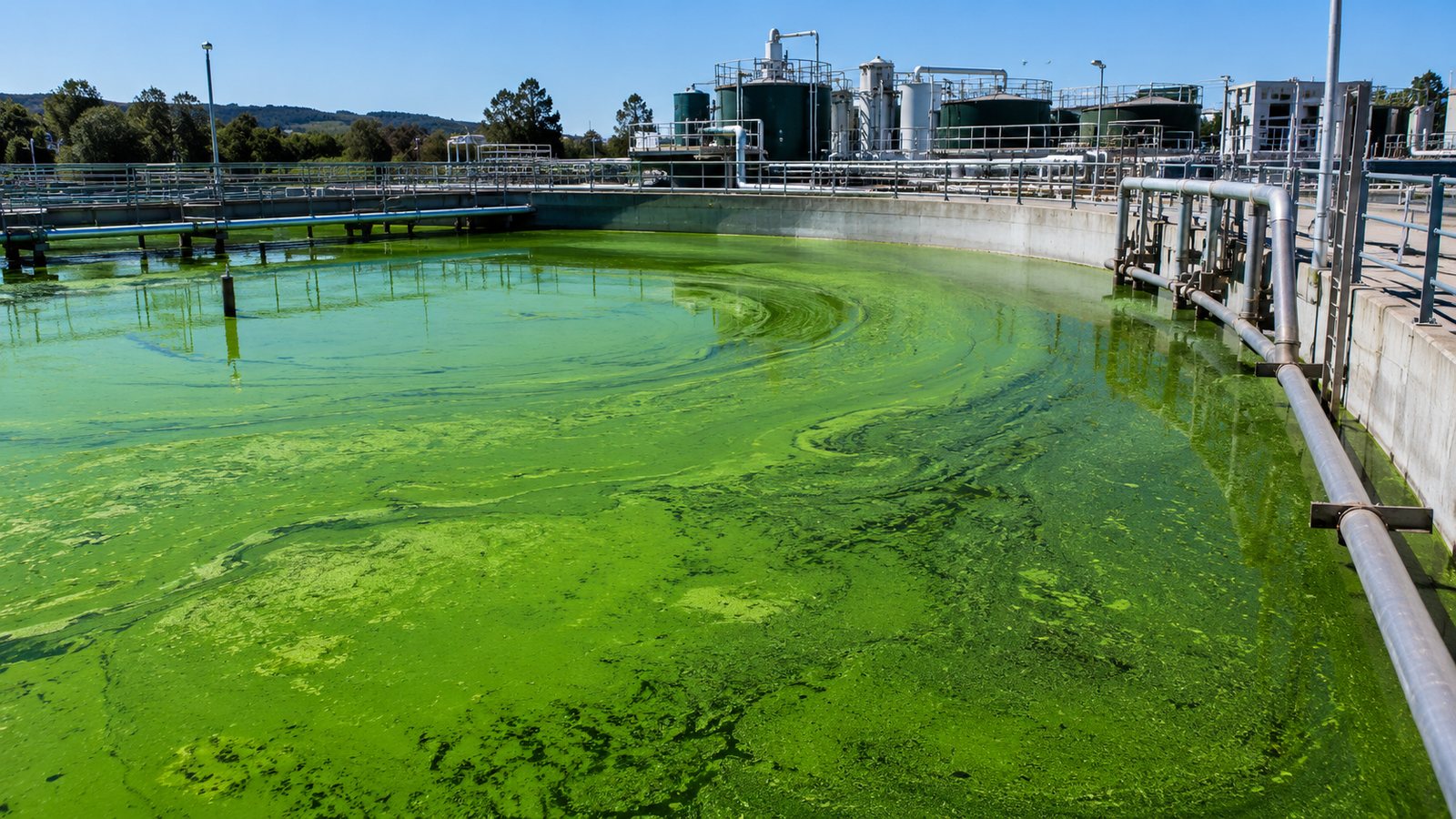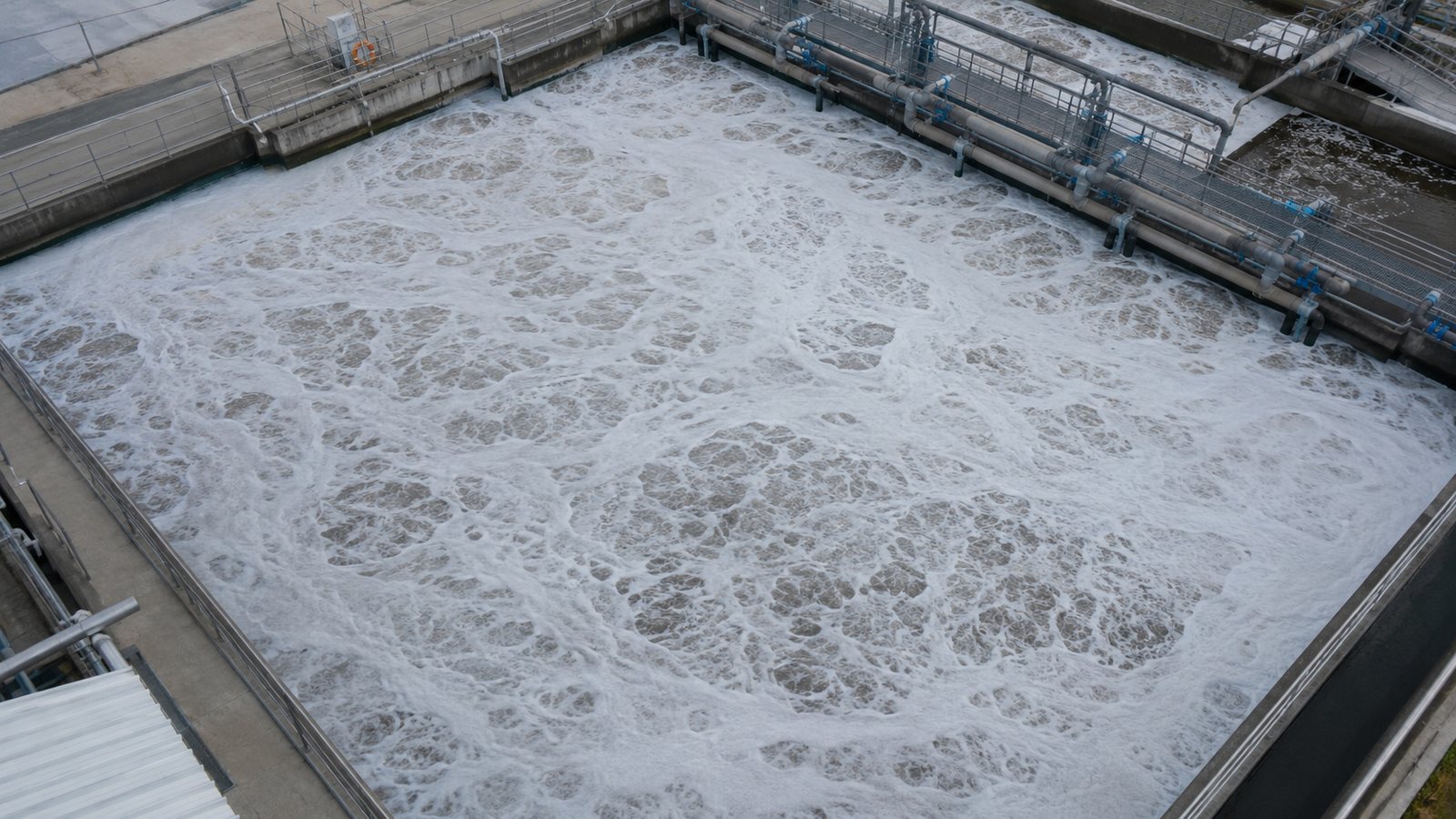
Foam is one of the most stubborn operational challenges in wastewater treatment. It carries solids into the effluent, disrupts secondary clarification, creates odor problems, and even poses safety hazards for operators.
What causes wastewater foam?
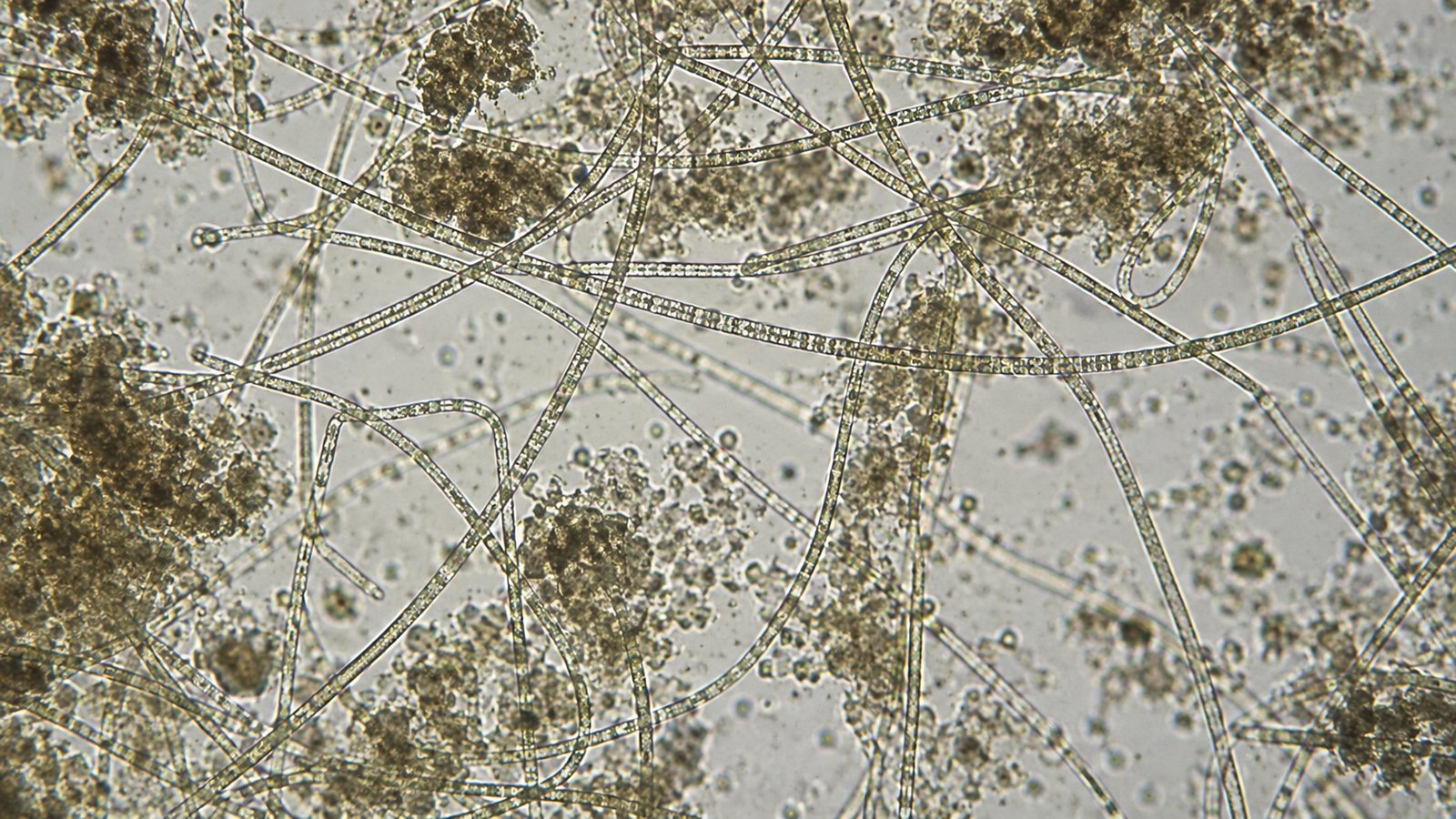
Foam develops from filamentous bacteria such as Nocardia and Microthrix parvicella, along with EPS (Extra Polymeric Substances)—sticky compounds that stabilize biofilms and make foam persistent. Because these substances resist conventional treatment, foam often returns even after operators knock it down.
The solution: JC 9465
JC 9465 is a mineral oxychloride solution that delivers a family of reactive oxygen species at an oxidation potential of 2.8–2.9 V — on par with the hydroxyl radical itself at 2.80 V, and well clear of ozone (2.07 V) or sodium hypochlorite (0.94 V). That reactivity is what lets it break down the structures that make foam persistent.
Foam is a symptom. Oxidise the filaments and the surface-active organics holding the bubble wall together and the foam has nothing left to stand on.
How it works
- Disrupts the EPS matrix that stabilizes foam
- Selectively targets foam-causing filamentous bacteria
- Preserves beneficial floc-forming microbes
- Provides residual oxidative protection
Demonstrated performance
The same oxidation that collapses foam also attacks the biofilm and extracellular polymeric substance holding filamentous growth together. Dosing to an ORP setpoint in the 600–800 mV range is the practical target for biofilm and EPS destruction, rather than dosing to a fixed ppm.
How does it beat traditional methods?
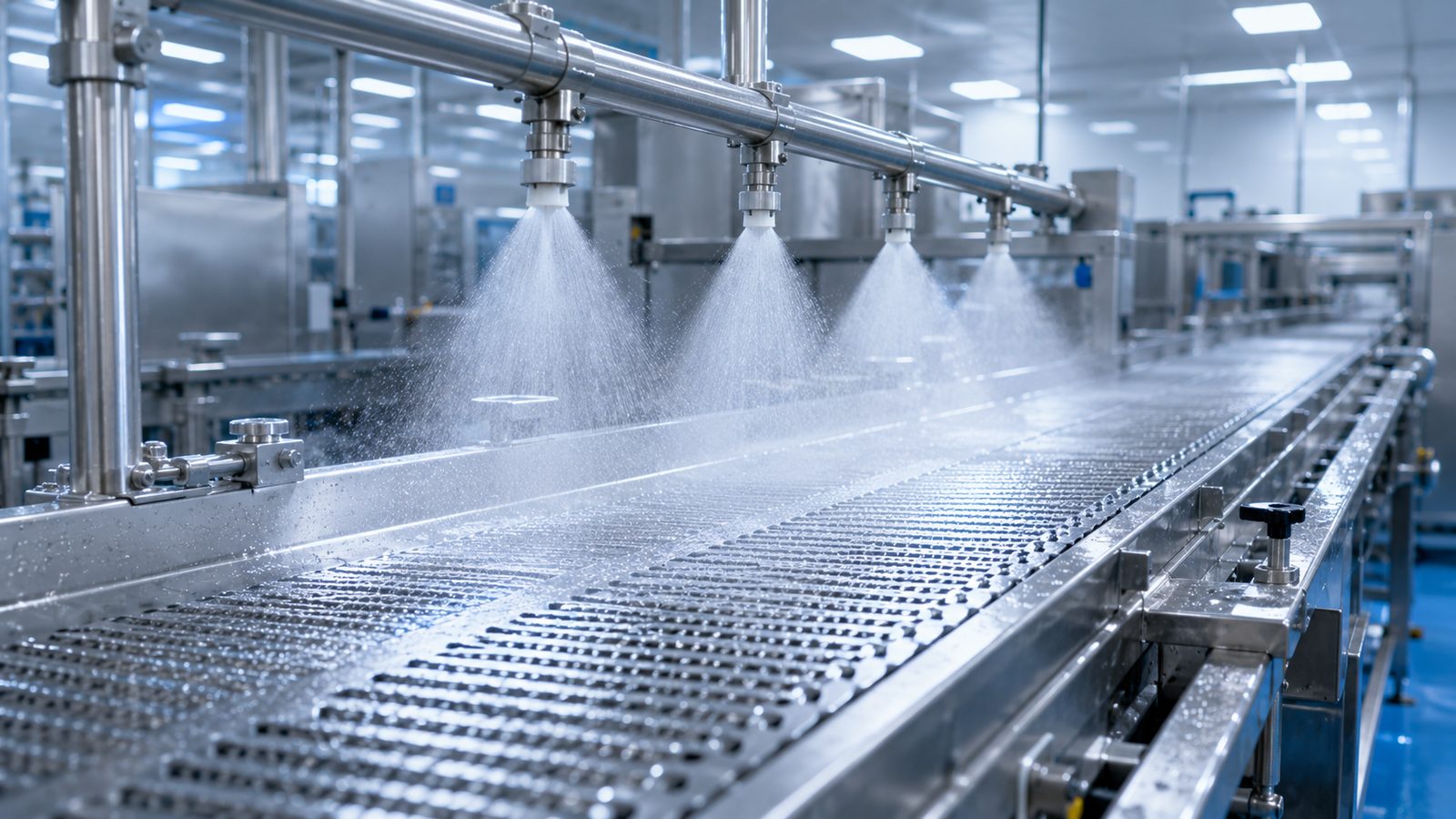
Unlike water sprays, defoamers, or chlorination, JC 9465 addresses the root causes of foam with longer-lasting results and fewer environmental risks.
Why does foam keep coming back?
Most foam control on a wastewater plant is symptom management. Spray water knocks the head down for a shift. A silicone or polyglycol defoamer collapses the bubble film chemically, but it does nothing to the organisms generating the surfactant, and it adds an oxygen-demanding load the plant then has to treat. Chlorination kills what it can reach in the bulk liquor, but filamentous organisms in a foam layer are physically shielded by the hydrophobic cell wall and the sticky extracellular polymer that binds the mat together.
That is the reason foam is persistent rather than merely recurring. Nocardia (now more often reported as Gordonia) and Microthrix parvicella both carry mycolic-acid cell walls that make the cells float, and both excrete extracellular polymeric substances (EPS) that stabilise the bubble wall. Until the EPS matrix is broken, the mat traps gas, floats solids, and re-forms as soon as the mechanical knockdown stops. Any treatment that does not oxidise the polymer is treating the foam and not the cause.
What chemistry knocks the foam down?
JC 9465 is a mineral oxychloride that delivers a family of reactive oxygen species — superoxide, hydroxyl radical, singlet oxygen, hydroperoxyl, and peroxide — at an oxidation potential of 2.8–2.9 V. That places it second only to fluorine (3.06 V) and on par with the hydroxyl radical itself (2.80 V), well clear of ozone at 2.07 V, chlorine dioxide at 1.57 V, chlorine gas at 1.36 V, and sodium hypochlorite at 0.94 V.
| Oxidant | Oxidation potential (V) |
|---|---|
| Fluorine | 3.06 |
| JC 9465 mineral oxychloride | 2.8–2.9 |
| Hydroxyl radical | 2.80 |
| Ozone | 2.07 |
| Chlorine dioxide | 1.57 |
| Chlorine gas | 1.36 |
| Sodium hypochlorite | 0.94 |
The practical significance is not just the number. A single-species halogen attacks a narrow set of bonds; a mixed ROS population attacks many at once, which is what allows the polymer matrix to be depolymerised rather than simply disinfected on its outer surface. The same mechanism is described in the work on biofilm removal and on eliminating filamentous organisms, because foaming and biofilm are two expressions of the same EPS problem.
Dosing to ORP, not to ppm
Foam control is dosed to an oxidation-reduction potential setpoint. ORP is a direct measurement of the oxidising work the liquor can do, so it self-corrects for changes in organic load, industrial contributions, and return-flow strength; a fixed ppm dose does not. The full set of targets is on the ORP reference chart.
| Objective | Target ORP |
|---|---|
| Odour and sulfide control | 200–400 mV |
| Biofilm / EPS destruction | 600–800 mV |
| Disinfection | 650–750 mV |
For foam, the objective sits in the EPS-destruction band. As a rule of thumb, 1.0 mg/L of product addresses 1,000–10,000 mg/L of organism load, while organic demand runs 1.0–8.0 mg/L of product per 1.0 mg/L of contaminant. The effective pH window is 4–9, which covers normal mixed-liquor and digester supernatant chemistry. Dose points are usually the aeration-basin surface where the mat accumulates, the RAS or WAS line, and any return flow that is reseeding the basin.
Selectivity and what to expect
The reason a controlled ORP setpoint matters is selectivity. Filamentous organisms have a much higher surface-area-to-volume ratio than a compact floc particle, so at a controlled dose they take the oxidative hit first while the floc-forming population survives. Overdosing removes that advantage and damages the biology the plant depends on, which is exactly why the setpoint — not the pump stroke — is the control variable.
Operators should expect the mat to thin and release rather than vanish instantly, and should plan for the released solids to report to the clarifier. The residual oxidative capacity carried into the basin also helps with the odour complaints that usually accompany a foam event, since the same chemistry drives sulfide control in the 200–400 mV band. Installation is minimal: a metering pump, a storage tank, and an optional ORP controller, typically commissioned in under 30 minutes.
JC 9465 is EPA FIFRA registered as a biocide and algaecide. The same mineral oxychloride chemistry is certified to NSF/ANSI/CAN Standard 60 for drinking-water treatment as both JC 9465 and JC 9450, at a maximum dose of 84 mg/L. For the plant-wide picture see Municipal & Utilities and the municipal and industrial research library.
Frequently asked questions
What causes foam in an activated sludge plant?
Filamentous organisms such as Nocardia (Gordonia) and Microthrix parvicella, whose mycolic-acid cell walls make them float, combined with the extracellular polymeric substances they excrete, which stabilise the bubble wall and hold the mat together. Because those sticky substances resist conventional treatment, foam often returns even after operators knock it down, so the visible mat is a symptom of the filament and polymer population rather than the problem itself.
Why do defoamers only work temporarily?
A defoamer collapses the bubble film but leaves the organisms and the extracellular polymer intact, so the mat re-forms. It also adds an oxygen-demanding load the plant then has to treat. Water sprays share the same limitation. Anything that acts only on the bubble wall leaves the filamentous growth and the polymer matrix that stabilise it in place, so the foam has everything it needs to rebuild.
What ORP should I run for foam control?
Foam control sits in the biofilm and EPS destruction band, 600 to 800 mV. Odour and sulfide control runs lower, at 200 to 400 mV. Dose to the ORP setpoint rather than to a fixed ppm, because ORP reflects the oxidising power actually present in the mixed liquor, while a fixed ppm feed rate says nothing about how much of that dose the water has already consumed.
Will JC 9465 harm the floc-forming biology?
At a controlled ORP setpoint, filamentous organisms take the oxidative hit first because of their much higher surface-area-to-volume ratio, while compact floc survives. Overdosing removes that selectivity, which is why the setpoint is the control variable. The chemistry is intended to target foam-causing filamentous bacteria while preserving beneficial floc-forming microbes, so holding the band matters more than the total volume fed.
Where should the product be dosed?
Typically at the aeration-basin surface where the mat accumulates, on the RAS or WAS line, and on any return flow that is reseeding the basin. Effective pH range is 4 to 9, which covers normal activated-sludge operation. Dosing the return streams matters because a basin that is continuously reseeded with filaments will foam again even after the surface mat has been knocked down.
Have a water challenge like this?
Talk to Jenfitch about JC 9465, safety data sheets, or scoping a treatment program for your facility.