Legionellosis remains one of the most dangerous waterborne threats in modern building and industrial water systems. Breaking the chain of infection means controlling the biofilm where the bacteria hide and multiply.
A brief history
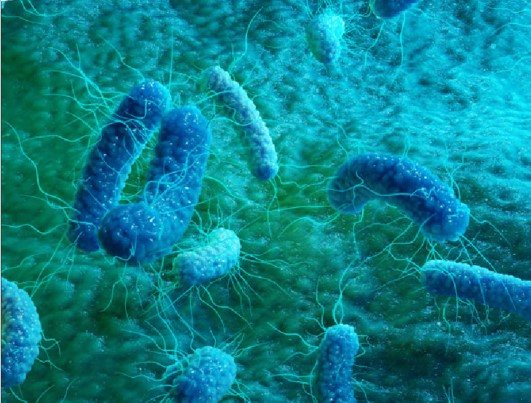
Legionnaires' disease traces back to a 1976 American Legion convention in Philadelphia, where 221 people fell ill and 34 died. The CDC identified the bacterium Legionella in 1977. Cases in the U.S. have grown nearly 450 percent since 2000.
What does the disease do?
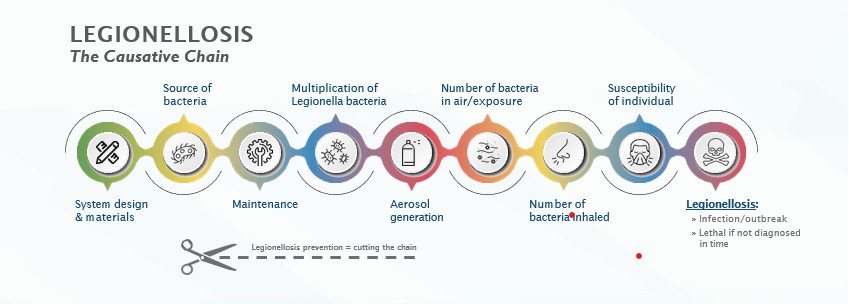
Two conditions result from Legionella infection: Legionnaires' disease, a potentially fatal pneumonia, and Pontiac Fever, a mild flu-like illness. Symptoms appear 2 to 10 days after exposure and may include cough, shortness of breath, fever, chills, headaches, muscle aches, and gastrointestinal illness. The WHO reports a 12 percent fatality rate in Europe.
Transmission and risk
Infection occurs through aerosolized water droplets less than five microns in diameter, produced by showerheads, hot tubs, cooling towers, and fountains. High-risk populations include people over 50, smokers, and those with compromised immunity.
The critical challenge: biofilm
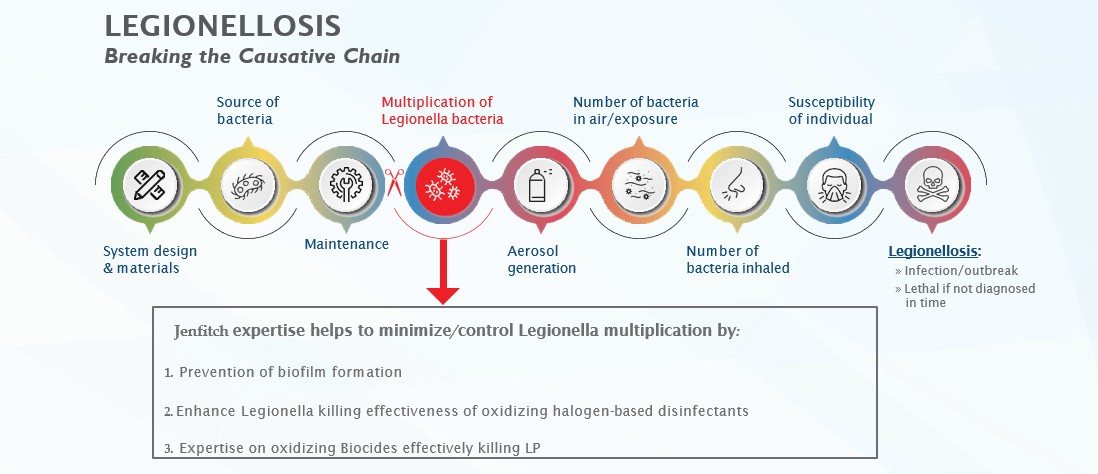
Approximately 90 percent of Legionella bacteria reside in biofilm rather than in the water stream. Biofilms provide protection and enable bacterial multiplication, particularly in warm water systems, with an optimum temperature of 37°C (98.6°F). Within biofilms, Legionella can infect amoebae, gaining enhanced resistance to treatments.
Approximately 90 percent of Legionella bacteria reside in biofilm rather than in the water stream.
How does mineral oxychloride break the chain?
Controlling Legionella means controlling biofilm. Jenfitch's mineral oxychloride chemistry, delivered through the JC 9465 product, is engineered to attack biofilm directly. It:
- Achieves a 6-log reduction of legionellosis in less than 10 seconds at ORP levels above +700 mV
- Generates hydroxyl radical ions and singlet oxygen ions
- Has an electrochemical oxidation potential of 2.8–2.9 V, compared to ozone at 2.07 V and sodium hypochlorite at 0.94 V
- Holds NSF approval, EPA biocide registration, and USDA Organic certification
What is the growth window?
Legionella grows between 20 and 50°C, with an optimum around 37°C. That is the normal condition of a cooling-tower basin, a warm-water riser, a stagnant branch line, or a mixing-valve outlet.
Temperature control rarely closes that window. Towers run inside it by design, and a hot-water system that is hot enough at the heater is seldom hot enough at the far end of the loop.
Why is biofilm the control point?
Work at the Center for Biofilm Engineering at Montana State University puts roughly 90% of the Legionella in a system inside the biofilm rather than in the water. Biofilm-grown Legionella is more resistant to disinfectants than planktonic cells, and the film harbours free-living amoebae the bacteria infect and shelter inside.
So a program built around a planktonic count and a bulk-water residual can read compliant and still produce a case. The bottle sees the fraction that has sloughed off; the dose is spent on the outer face of an EPS gel it never penetrates. Every result is true; the reservoir underneath is untouched.
Take the film apart and the habitat, the amoebal host, and the resistance mechanism go with it — the same logic behind JC 9465 as a biofilm biodispersant.
What does ORP do to the reservoir?
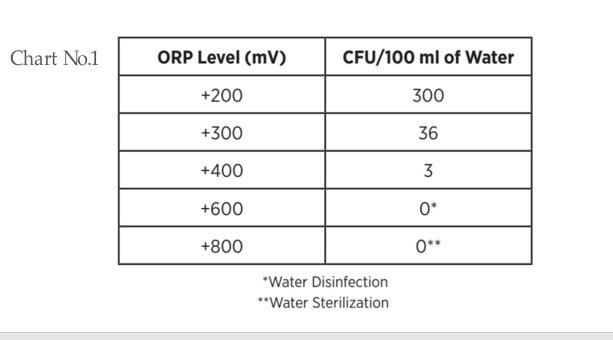
Testing at Special Pathogen Laboratory in Pennsylvania recorded a 6-log Legionella reduction in under 10 seconds with the water held above +700 mV, and elimination of legionellosis in most systems in under four hours. Those are ORP conditions, not ppm conditions.
| ORP | Bacteria (CFU / 100 mL) |
|---|---|
| +200 mV | 300 |
| +300 mV | 36 |
| +400 mV | 3 |
| +600 mV | 0 — disinfection |
| +800 mV | 0 — sterilization |
Full process targets are on the ORP reference chart; field results are in the Legionella case study.
The same film is costing heat transfer
Biofilm on a heat-transfer surface is about 300% worse than the same thickness of calcium-carbonate scale, and ASHRAE notes that a fouling factor of just 0.001 can cut efficiency by around 10%. A film too thin to see on inspection is already on the power bill; Southern California Edison has cited electricity savings of 20% or more where fouling is properly controlled.
Underneath it, the anaerobic zone at the metal surface shelters the bacteria that drive pitting corrosion. Legionella risk, lost heat transfer, and MIC are three symptoms of one condition. More in our cooling tower and scrubber research.
Setpoints, monitoring, and verification
For routine biofilm and MIC control in an open recirculating tower, hold 400–500 mV. That is a maintenance band: enough potential to stop a film establishing, without a halogen residual high enough to attack fill, gaskets, and mild steel.
A remediation event is different. An established film, or a positive result, needs the higher setpoint: the 600–800 mV band to break down EPS, and above +700 mV for the kill rates recorded at Special Pathogen Laboratory. Drop back to the maintenance band once the film releases.
- Trend ORP continuously on the recirculating line, not as spot readings
- Log excursions below setpoint — that is when the film rebuilds
- Sample dead legs, low-flow branches, and warm risers, not only the easy tap
- Keep culture work as verification; the ORP trend is the control loop
See also Industrial & Cooling Towers.
Frequently asked questions
Where does Legionella actually live in a cooling tower?
Roughly 90% of it lives inside biofilm on wetted surfaces rather than in the circulating water, according to work at the Center for Biofilm Engineering at Montana State University. Biofilm-grown Legionella is also more resistant to disinfectants, and the film harbours amoebae the bacteria infect and shelter inside.
What water temperature does Legionella grow at?
Legionella grows between 20 and 50°C, with an optimum around 37°C. That covers cooling-tower basins, warm-water risers, stagnant branch lines, and mixing-valve outlets. Cooling towers operate inside that band by design, so temperature control alone will not close the growth window.
What ORP is needed to control Legionella?
Special Pathogen Laboratory in Pennsylvania recorded a 6-log Legionella reduction in under 10 seconds with the water held above +700 mV, and elimination of legionellosis in most systems in under four hours. Routine cooling-tower biofilm and MIC control runs lower, at 400–500 mV.
Why do Legionella samples come back negative when the system still has a problem?
Because the bottle samples the water and the organism lives in the film. A planktonic count sees only the fraction that has sloughed off, while the reservoir on the wetted surfaces stays intact and reseeds the water continuously. Biofilm, not the count, is the control point.
Does biofilm affect anything other than Legionella risk?
Yes. Biofilm on a heat-transfer surface is about 300% worse than the same thickness of calcium-carbonate scale, and ASHRAE notes a fouling factor of just 0.001 can cut efficiency by around 10%. The anaerobic zone beneath it also drives pitting and microbiologically influenced corrosion.
Have a water challenge like this?
Talk to Jenfitch about JC 9465, safety data sheets, or scoping a treatment program for your facility.