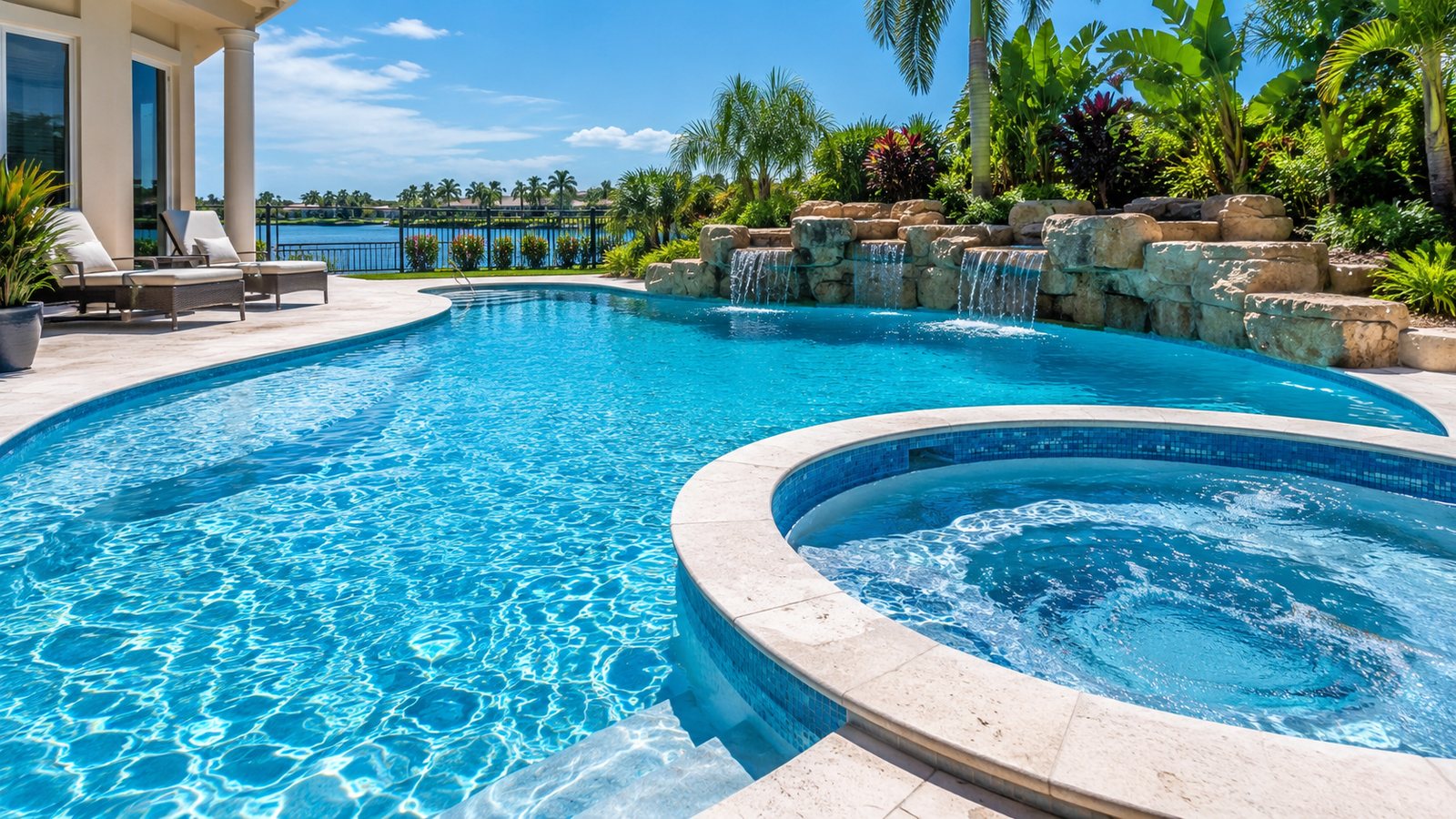
Advanced oxidation processes (AOP) are changing how swimming pools, hot tubs, and spas are sanitized. JC 9465 is positioned as a superior alternative to conventional chlorine and bromine treatments.
How does the technology work?
JC 9465 generates hydroxyl radicals that rapidly oxidize contaminants. The product is described as a chelation of minerals with oxygen in liquid form that works effectively across varying pH levels and temperatures, a key advantage over pH-sensitive conventional chemistry.
What are the advantages over traditional methods?
- Reduces disinfection byproducts (DBPs) like trihalomethanes and haloacetic acids
- Requires less frequent maintenance and chemical rebalancing
- Functions effectively despite pH fluctuations, unlike salt chlorinators
- Minimizes irritation from chloramines
Regulatory status
JC 9465 is EPA FIFRA registered as a biocide and algaecide. The same mineral oxychloride chemistry is certified to NSF/ANSI/CAN Standard 60 for drinking-water treatment as both JC 9465 and JC 9450, at a maximum dose of 84 mg/L.
Case study results
Private pool operators reported significant cost reductions. One user stated annual chemical expenses dropped nearly $1,000 after switching. Another maintained a 30,000-gallon pool on 1 ounce per 1,000 gallons weekly, reporting crystal-clear water with minimal maintenance.
One user stated annual chemical expenses dropped nearly $1,000 after switching.
Hot tub performance
A hot tub study showed that water remained clear and free from heterotrophic plate count organisms despite an elevated pH of 8.4 and 104°F temperatures over two months.
What are the limitations?
The technology is still establishing itself, and several challenges remain:
- Market resistance due to established trust in conventional products
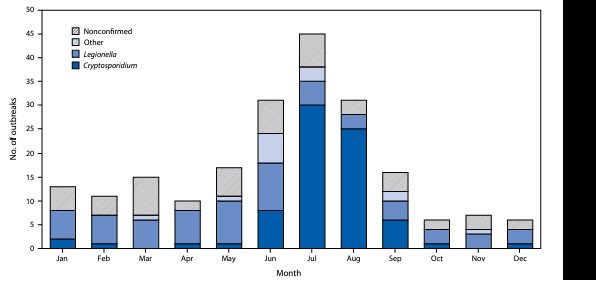
- No testing yet against chlorine-resistant pathogens like Cryptosporidium
- Limited deployment in public pool environments
- Requires regulatory navigation
The real problem is not the chlorine, it is the chloramines
The smell people call “too much chlorine” at a pool is almost always the opposite. Free chlorine has very little odour. What stings the eyes and hangs over an indoor pool deck is combined chlorine — chloramines formed when free chlorine reacts with the nitrogen compounds that swimmers bring with them: sweat, urea, cosmetics, skin cells. A pool that smells strongly is a pool whose free chlorine has already been consumed and converted.
Conventional chlorine chemistry is also unhelpfully pH-dependent. Hypochlorous acid, the active species, has an oxidation potential of 1.49 V, but as pH rises it dissociates into hypochlorite ion at 0.94 V. A pool drifting from pH 7.4 to 8.0 therefore loses a large fraction of its real disinfecting power while the test strip still reports a residual. Salt chlorinators do not escape this — they generate the same hypochlorous acid and the electrolysis process drives pH upward, which is why they need constant acid addition.
Cyanuric acid stabiliser adds a third complication. It protects chlorine from UV degradation, which is necessary outdoors, but it also binds most of the free chlorine into a reservoir that is slow to act. High-stabiliser pools routinely test at an acceptable residual while disinfecting poorly.
What advanced oxidation does differently
JC 9465 is a mineral oxychloride — a chelation of minerals with oxygen in liquid form — that generates a family of reactive oxygen species including superoxide, hydroxyl radical, singlet oxygen, hydroperoxyl, and peroxide, at an oxidation potential of 2.8–2.9 V.
| Oxidant | Oxidation potential (V) |
|---|---|
| Fluorine | 3.06 |
| JC 9465 mineral oxychloride | 2.8–2.9 |
| Hydroxyl radical | 2.80 |
| Ozone | 2.07 |
| Chlorine dioxide | 1.57 |
| Hypochlorous acid | 1.49 |
| Chlorine gas | 1.36 |
| Sodium hypochlorite | 0.94 |
Because it works across a pH range of 4–9 rather than collapsing above 7.5, the practical difference is that the water keeps disinfecting through the pH drift that every pool experiences. It also attacks the organic nitrogen precursors themselves, so fewer chloramines are formed in the first place rather than being burned off later with a shock dose. Reduced disinfection by-product formation — trihalomethanes and haloacetic acids — follows from the same precursor-destruction mechanism described in our work on ozone systems.
Why measure ORP in recreational water?
Health departments and serious operators have used oxidation-reduction potential rather than ppm for years, because ORP measures the water's actual ability to inactivate an organism whereas ppm measures how much chemical is present regardless of whether it is available. The relationship between ORP and bacterial survival is direct.
| ORP | Indicative bacterial count |
|---|---|
| +200 mV | 300 CFU / 100 mL |
| +300 mV | 36 CFU / 100 mL |
| +400 mV | 3 CFU / 100 mL |
| +600 mV | 0 — disinfection |
| +800 mV | 0 — sterilization |
Recreational water is normally held in the disinfection band of 650–750 mV; the ORP reference chart covers every process target. Dosing to a setpoint means the feed rate responds automatically to bather load, which is the variable that actually drives demand. Installation is a metering pump, a storage tank, and an optional ORP controller, typically under 30 minutes.
The hot-tub result is worth reading in this light: water stayed clear and free of heterotrophic plate count organisms across two months at pH 8.4 and 104°F. Both of those conditions — elevated pH and high temperature — are where conventional chlorine performs worst. Product also carries a six-month shelf life, against roughly 30 days for liquid chlorine, which is why the seasonal-storage loss that pool owners quietly absorb every year largely disappears.
For the same chemistry in commercial service, see biofilm control in cooling systems and the algaecide and biocide overview.
Frequently asked questions
Why does my pool smell like chlorine?
That smell is combined chlorine, not free chlorine. Chloramines form when free chlorine reacts with nitrogen compounds swimmers introduce, such as sweat, urea, and cosmetics. A strong smell indicates the free chlorine has already been consumed, so the water is carrying reaction byproducts rather than active sanitizer. Those same chloramines are the compounds behind stinging eyes and irritated skin, which is why a sharper odour usually signals a pool needing attention.
Does JC 9465 work at high pH?
Yes. The effective range is pH 4 to 9. Conventional chlorine loses most of its disinfecting power above about pH 7.5, because hypochlorous acid at 1.49 V dissociates into hypochlorite ion at 0.94 V. JC 9465 works across varying pH levels and temperatures because it is a chelation of minerals with oxygen in liquid form, which is an advantage over pH-sensitive chemistry such as salt chlorinators.
What ORP should a pool or spa run at?
The disinfection band is 650 to 750 mV. As a reference, bacterial counts run about 300 CFU per 100 mL at plus 200 mV, 36 at plus 300 mV, 3 at plus 400 mV, and zero from plus 600 mV upward.
How does it perform in a hot tub?
A hot tub study recorded water that stayed clear and free of heterotrophic plate count organisms over two months at pH 8.4 and 104 degrees Fahrenheit, conditions where conventional chlorine performs worst. Heat accelerates chemical demand and the elevated pH pushes free chlorine toward its weaker form, so holding both clarity and plate counts under those conditions reflects chemistry that is not dependent on pH staying in a narrow band.
What are the current limitations?
The technology is still establishing itself commercially. It has not yet been tested against chlorine-resistant pathogens such as Cryptosporidium, deployment in public pool environments remains limited, and public facilities require regulatory review before adoption. The published results to date come mainly from private pools and hot tubs, so operators of larger public installations should expect to work through the applicable review process before switching a facility over.
Have a water challenge like this?
Talk to Jenfitch about JC 9465, safety data sheets, or scoping a treatment program for your facility.