
A Houston, TX investigation demonstrated complete H₂S removal from natural gas using JC 9465 ROS, a new mineral oxychloride compound that generates Reactive Oxygen Species (ROS). The next-generation wet scrubbing approach harnesses hydroxyl radicals to eliminate H₂S in flue gases at a fraction of the cost of competing technologies.
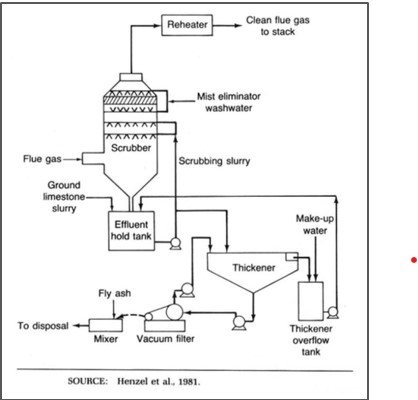
The study
The investigation treated natural gas containing 2,000 mg/l H₂S and 5% CO₂. JC 9465 ROS completely eliminated the H₂S while producing an inert sulfate residue.
Technical findings
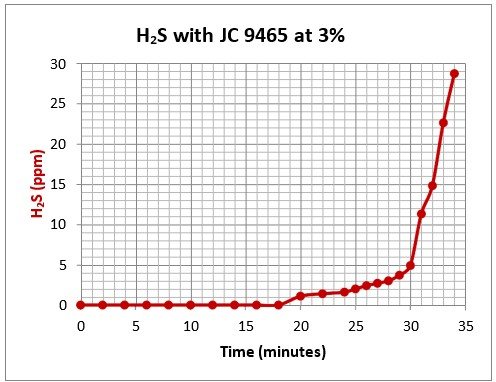
The product raised the oxidation-reduction potential from -150 mV to +100 mV, fully removing H₂S. Treatment maintains effectiveness within a +100 mV to +300 mV control range.
Oxidation potential comparison
The hydroxyl radical (OH•) rates at 2.80 V, second only to fluorine at 3.06 V among listed oxidizers. This high oxidation potential enables rapid H₂S oxidation.
What does the treatment cost?
JC 9465 ROS delivered dramatic economics: a $10,000 capital cost with $4,700 annual O&M, yielding $0.0040 per pound of H₂S removed, versus competing technologies ranging from $0.24 to $148.41 per pound.
JC 9465 ROS removed H₂S at $0.0040 per pound, versus $0.24 to $148.41 for competing technologies.
Is this a safer green technology?
JC 9465 is non-flammable and non-combustible, making it a green technology well suited to petroleum, biogas, and industrial applications.
Why is hydrogen sulfide so expensive?
Hydrogen sulfide is corrosive, toxic, and odour-detectable far below the concentration at which it becomes dangerous. In a gas stream it attacks downstream equipment, poisons catalysts, and puts a facility on the wrong side of both air-permit limits and neighbourhood complaints. The conventional answers each carry a penalty. Iron sponge and other solid scavengers are cheap to install and expensive to change out, with a spent-media disposal problem attached. Liquid triazine scavengers are effective but consumable, and they generate dithiazine solids that foul the very equipment they were installed to protect. Amine systems and biological scrubbers work well at scale but bring capital cost, footprint, and operator attention that a mid-sized site cannot justify.
Caustic scrubbing is the closest conventional comparison to what is described here, and it illustrates the difference. Caustic absorbs H₂S but does not oxidise it, so the sulfide simply moves into the scrubber liquor and has to be dealt with there. An oxidising scrubber liquor converts the sulfide to sulfate in the tower and the problem leaves as an inert salt.
What happens chemically in the tower?
JC 9465 is a mineral oxychloride that generates a family of reactive oxygen species — superoxide, hydroxyl radical, singlet oxygen, hydroperoxyl, and peroxide — at an oxidation potential of 2.8–2.9 V. Only fluorine, at 3.06 V, is higher.
| Oxidant | Oxidation potential (V) |
|---|---|
| Fluorine | 3.06 |
| JC 9465 mineral oxychloride | 2.8–2.9 |
| Hydroxyl radical | 2.80 |
| Ozone | 2.07 |
| Chlorine dioxide | 1.57 |
| Chlorine gas | 1.36 |
| Sodium hypochlorite | 0.94 |
Sulfide is oxidised through to sulfate, which is inert, water-soluble, and unproblematic in the blowdown. There is no elemental-sulfur plugging step and no dithiazine to remove from the packing. Because the reaction is driven by oxidation potential rather than by stoichiometric scavenging, the liquor keeps working as long as the setpoint is held.
Control and dosing
The control variable is the oxidation-reduction potential of the scrubber liquor. An untreated sour liquor typically sits around −150 mV. Bringing it to +100 mV eliminated H₂S completely in the Houston work, and the treatment holds its effectiveness across a +100 to +300 mV control band. Running much higher than that band wastes product without improving removal, which is the practical argument for an ORP controller rather than a fixed feed rate.
| Application | Target ORP |
|---|---|
| H₂S control in wet scrubbers | +100 to +300 mV |
| Wastewater odour and sulfide control | 200–400 mV |
| Cooling towers (biofilm & MIC) | 400–500 mV |
| Biofilm / EPS destruction | 600–800 mV |
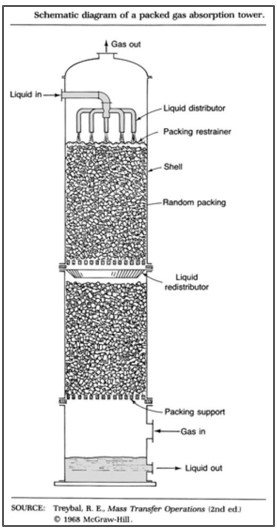
The dosing rule of thumb for sulfide is approximately 1 mg/L of JC 9465 per 2.0 mg/L of H₂S, with an effective pH window of 4–9. Installation on an existing packed tower is a metering pump, a storage tank, and an optional ORP controller — typically under 30 minutes of work, because the tower, the recirculation pump, and the packing are already there. That is the main reason the capital number in this study is $10,000 rather than a seven-figure retrofit.
Where does this apply?
The same chemistry and the same control band apply anywhere a sour gas stream meets a wet scrubber: natural-gas conditioning and oil and gas production, biogas and digester-gas cleanup, rendering and food-processing odour control, headworks and lift-station vents at municipal wastewater plants, and the sulfide-bearing off-gas from tanneries and pulp operations. In produced-water and downhole service the same oxidation chemistry is what drives paraffin control and the iron-sulfide work reported in our oil and gas research.
JC 9465 is non-flammable and non-combustible, which matters in a classified area, and it is EPA FIFRA registered as a biocide and algaecide. The same mineral oxychloride chemistry is certified to NSF/ANSI/CAN Standard 60 for drinking-water treatment as both JC 9465 and JC 9450, at a maximum dose of 84 mg/L. Full documentation is in the document library, and the H₂S scrubber case study covers the field results in detail.
Frequently asked questions
How much H2S can a wet scrubber remove with JC 9465?
Complete removal was achieved at the concentration tested. The Houston, Texas investigation treated natural gas containing 2,000 mg/L H2S and 5% CO2 and eliminated the H2S completely, producing an inert sulfate residue. JC 9465 is a mineral oxychloride compound that generates reactive oxygen species, and the hydroxyl radicals it produces oxidize sulfide rapidly enough to strip it from the gas stream as it passes through the scrubber.
What ORP should the scrubber liquor run at?
Plus 100 to plus 300 mV. Untreated sour liquor typically sits near minus 150 mV; bringing it to plus 100 mV eliminated H2S in the study, and treatment stays effective across that control band. Running well above the band wastes product without improving removal. Oxidation-reduction potential is measured in millivolts and reflects the oxidizing power actually present in the liquor, which makes it a practical setpoint for controlling the feed rate.
How does the cost compare to other H2S technologies?
The study recorded $10,000 in capital cost and $4,700 in annual operations and maintenance, working out to $0.0040 per pound of H2S removed. Competing technologies in the same comparison ranged from $0.24 to $148.41 per pound. Those figures combine installed capital with annual operating and maintenance spend rather than chemical price alone, so they describe the cost of running the whole scrubbing program, not just the reagent.
What is the reaction product, and what happens to it?
Sulfide is oxidised through to sulfate, which is inert and water-soluble and leaves with the scrubber blowdown. There is no elemental-sulfur plugging and no dithiazine solids as with triazine scavengers. Because the sulfur ends up in its fully oxidised form, it stays dissolved in the recirculating liquor instead of dropping out as a solid, so packing, spray nozzles, and the recirculation pump are not fouled by reaction products.
Can it be retrofitted to an existing scrubber?
Yes. The tower, recirculation pump, and packing are already in place, so the retrofit is a metering pump, a storage tank, and an optional ORP controller, typically installed in under 30 minutes. The existing gas-absorption equipment does the mass transfer exactly as before; only the chemistry circulating through it changes. That keeps the installed capital low and lets an operating scrubber switch over without redesigning the vessel or its internals.
Have a water challenge like this?
Talk to Jenfitch about JC 9465, safety data sheets, or scoping a treatment program for your facility.