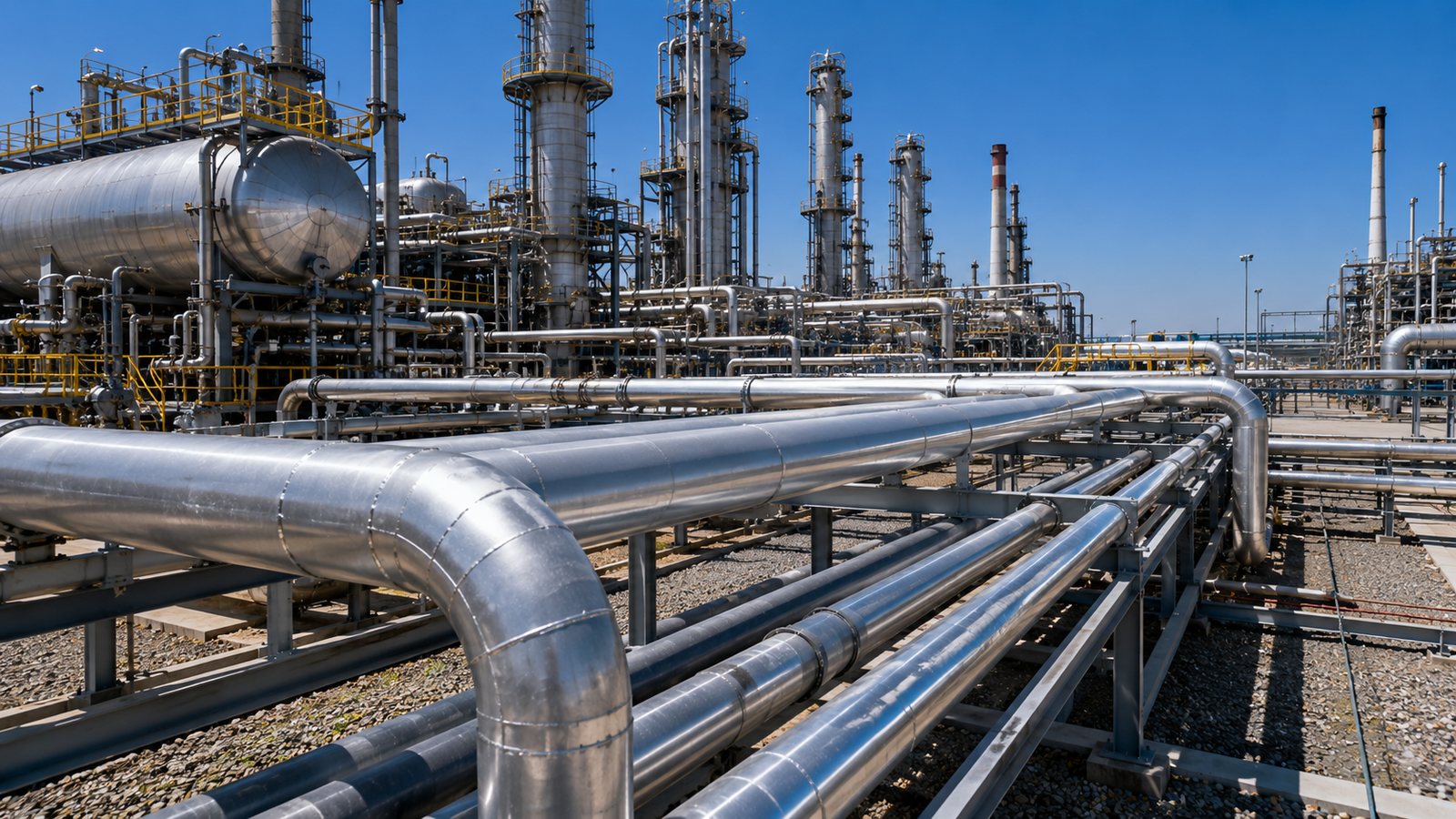
JC 9465 is a paraffin inhibitor for oilfield applications that restores and enhances flow assurance in water systems. Paraffin forms when crude oil is flowing up to the surface and hits ambient temperature, building deposits that restrict production.
What is the paraffin challenge?
As crude oil cools on its way to the surface, paraffin precipitates and accumulates within tubing and flow lines. Left untreated, these deposits progressively choke off production and drive up remediation costs.
Traditional removal methods
Conventional approaches to paraffin removal are slow and labor-intensive. They include:
- Mechanical hot oiling
- Scraping with hot water
- Coiled tubing with chemical solvents
- Thermal treatments
JC 9465 is positioned as superior to these methods, working within minutes, not hours or days.
Field performance
In field application, JC 9465 was injected at 5 gallons daily. By the third day, the flow rate was checked and there was an increase of 10X from the previous flow rate.
By the third day, the flow rate was checked and there was an increase of 10X from the previous flow rate.
Treatment scheduling
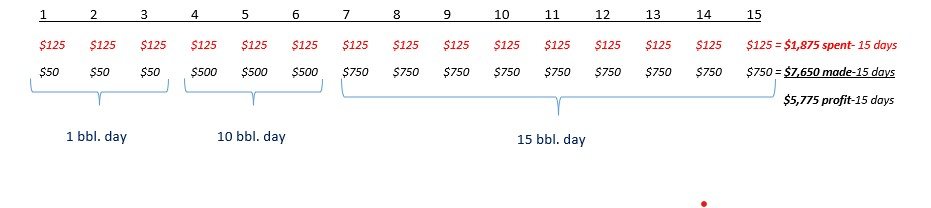
Daily applications using 1 to 5 gallon buckets are recommended, with potential production increases of 15X. Every-other-day applications may yield approximately 10X production increases, giving operators flexibility to match treatment frequency to well economics.
Market opportunity
Canada and Venezuela are identified as major paraffin deposit locations, with secondary markets in the U.S., Middle East, and Russia. Fracking operations also represent an additional market opportunity, as they consume an average of 20 million gallons of water for one well.
Why does paraffin keep coming back?
Paraffin is not a contaminant introduced into a well; it is part of the crude. Long-chain n-alkanes, typically C18 and heavier, stay dissolved in the oil while it is at reservoir temperature. As the fluid rises, it loses heat to the surrounding formation and eventually to ambient air, and at the wax appearance temperature those molecules come out of solution and crystallise on the coldest surface available — the inside wall of the tubing or flow line.
The deposit is self-reinforcing in two ways. Each layer of wax insulates, which lowers the wall temperature further and accelerates the next deposition. And the restricted bore raises velocity and pressure drop, which changes the thermal profile again. That is why a well that has been marginal for months can decline sharply over a few weeks: the process accelerates as it proceeds.
Deposits are rarely pure wax either. Asphaltenes, formation fines, scale, and iron sulfide co-deposit in the same matrix, producing a composite that a solvent formulated for wax alone will not fully clear. Any treatment aimed only at the alkane fraction leaves the rest behind as a nucleation site for the next cycle.
What does conventional remediation really cost?
Hot oiling is the traditional answer and carries a well-documented drawback: the injected oil cools as it travels, so wax dissolved near the surface can re-precipitate deeper in the tubing or, worse, be carried into the formation near the perforations. That risk is precisely why hot oiling is a repeating expense rather than a fix.
Mechanical scraping and cutting work but require intervention, which means a rig or a wireline unit, a crew, and downtime. Coiled tubing with solvent is effective and expensive, and aromatic solvents bring their own handling, exposure, and disposal considerations. Thermal treatment addresses the symptom without touching the deposition mechanism.
For a stripper well producing a few barrels a day, all of these share one fatal problem: the cost of the intervention is measured against a revenue stream that may be under $200 a day. The economics of remediation stop working long before the well stops producing, which is why marginal wells get shut in while oil is still in the ground.
How does the oxidative approach work?
JC 9465 is a mineral oxychloride that generates a family of reactive oxygen species — superoxide, hydroxyl radical, singlet oxygen, hydroperoxyl, and peroxide — at an oxidation potential of 2.8–2.9 V, second only to fluorine at 3.06 V.
| Oxidant | Oxidation potential (V) |
|---|---|
| Fluorine | 3.06 |
| JC 9465 mineral oxychloride | 2.8–2.9 |
| Hydroxyl radical | 2.80 |
| Ozone | 2.07 |
| Chlorine dioxide | 1.57 |
| Chlorine gas | 1.36 |
| Sodium hypochlorite | 0.94 |
Because the mechanism is oxidative rather than solvent-based, it does not depend on maintaining a temperature or on matching a solvent to a specific hydrocarbon fraction. It is delivered as a ready-to-use liquid, is non-flammable and non-combustible — which matters for storage in a classified area on a small lease — and it addresses the microbial component of the deposit at the same time. Sulfate-reducing bacteria produce the iron sulfide that co-deposits with wax and drives downhole souring and corrosion; the same chemistry controls it, which is the link to the H₂S and sour-gas work and the scrubber case study.
Field results and the stripper-well case
In field application, injection at 5 gallons daily produced a tenfold increase in flow rate by the third day. Daily treatment is recommended for the best result, with reported production increases up to 15×; every-other-day treatment gives roughly 10×, letting an operator match frequency to well economics.
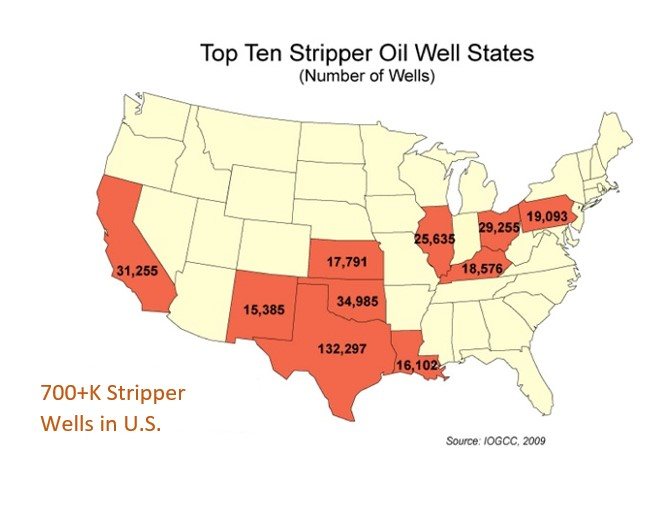
The stripper-well field study, run with JC 9450 (the same mineral oxychloride chemistry), makes the economics concrete: wells producing 1–2 barrels per day were brought to 15 barrels per day for under $100 per day of treatment, and a side-by-side comparison recorded a 72% increase. In the United States alone the stripper-well population is very large, and these are exactly the wells for which conventional remediation does not pencil out. The stripper-well case study covers the detail.
Fracking adds a second application: an average of roughly 20 million gallons of water is used for a single well, and that produced and flowback water carries its own biological, sulfide, and iron burden. More is in oil and gas research, Oil & Gas, and the document library.
Frequently asked questions
Why does paraffin form in oil wells?
Long-chain alkanes, typically C18 and heavier, stay dissolved at reservoir temperature. As the fluid rises and cools past the wax appearance temperature, they crystallise on the coldest available surface, which is the tubing wall. Each layer insulates further, so deposition accelerates as it proceeds.
What is wrong with hot oiling?
The injected oil cools as it travels, so wax dissolved near the surface can re-precipitate deeper in the tubing or be carried toward the formation near the perforations. It manages the symptom and has to be repeated. Hot oiling sits alongside scraping with hot water, coiled tubing with chemical solvents, and thermal treatments as a conventional removal method, and all of them are slow and labor-intensive compared with treating the water chemistry.
How quickly does JC 9465 work?
In field application at 5 gallons injected daily, flow rate was checked on the third day and had increased tenfold over the previous rate. The product is positioned as working within minutes rather than the hours or days that mechanical hot oiling, scraping with hot water, coiled tubing with solvents, and thermal treatments require, because it acts on the deposit chemistry in the flow line instead of heating the wellbore.
What treatment frequency is recommended?
Daily treatment gives the best result, with reported production increases up to 15 times. Every-other-day treatment gives roughly 10 times, which lets an operator match frequency to the economics of the individual well. Daily applications are made using 1 to 5 gallon buckets, so treatment cost scales with how much is applied and the economics improve as the production rate of the well rises.
Does it help with iron sulfide and souring as well?
Yes. Sulfate-reducing bacteria produce the iron sulfide that co-deposits with wax and drives downhole souring and corrosion. The same oxidative chemistry addresses that microbial component, which is why it is also used for H2S control in wet scrubbers. Treating the microbial side matters because removing wax alone leaves the organisms that keep regenerating sulfide, so the deposit rebuilds and the flow restriction returns.
Have a water challenge like this?
Talk to Jenfitch about JC 9465, safety data sheets, or scoping a treatment program for your facility.