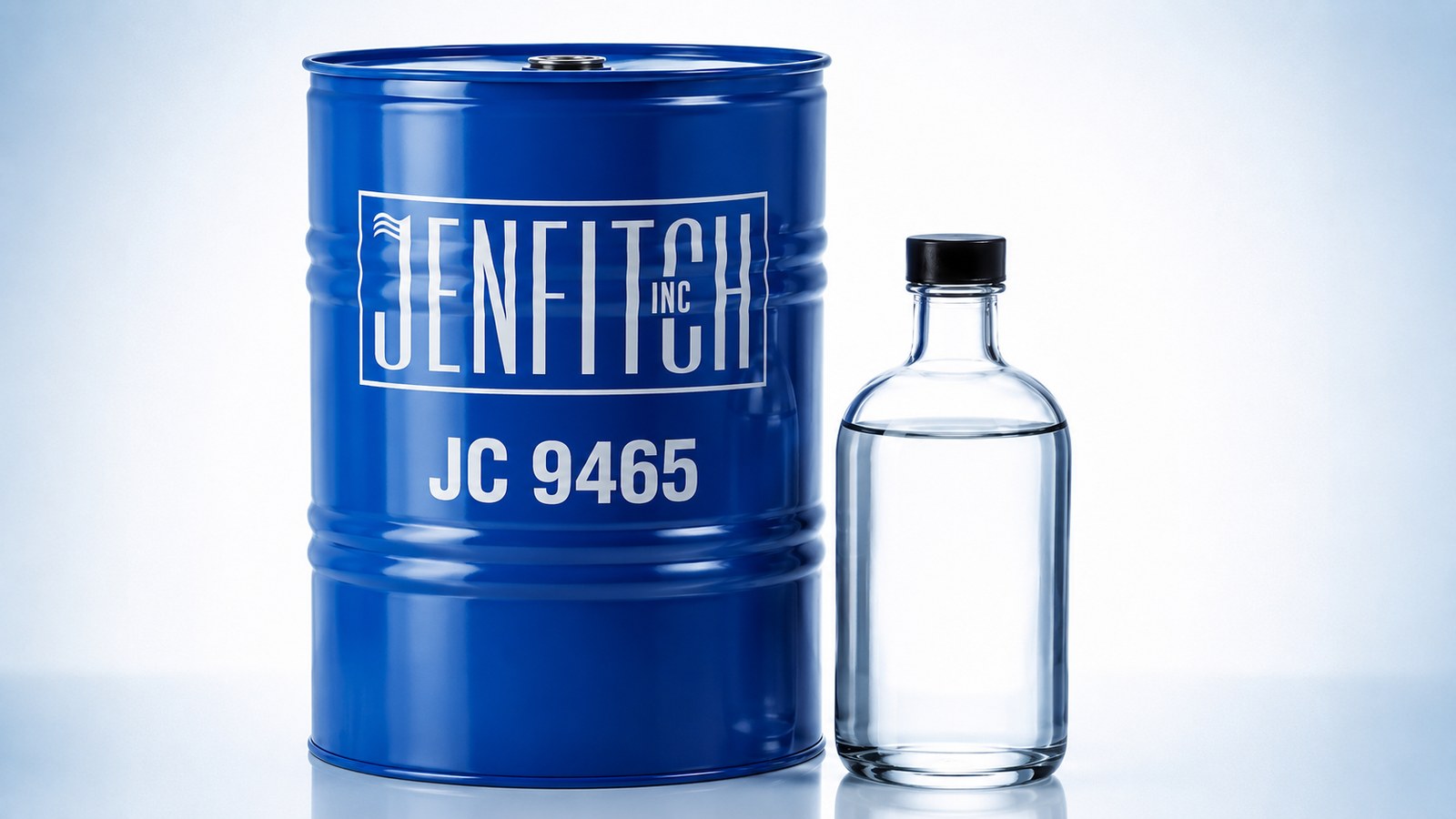
Jenfitch, Inc. has obtained both EPA FIFRA and USDA Organic Standard (7 CFR Part 205) approval for JC 9465, a proprietary sodium oxychloride formulation designed as an agricultural treatment solution. This dual approval clears the way for JC 9465 to be used across a wide range of organic and conventional agricultural operations.
A versatile agricultural treatment
JC 9465 was developed to address multiple agricultural needs within a single product. Its approved applications span the full production cycle, from the field to the packing house.
- Crop production aid
- Disease and pest control
- Fertilizer and soil amendment
- Livestock production support
- Post-harvest facility processing
Performance and effectiveness
Independent testing demonstrates that JC 9465 delivers rapid, powerful disinfection well beyond the capabilities of conventional chlorine.
- 12 to 24 times more effective than chlorine against biofilms, bacteria, viruses, and spores.
- Achieved a 6-log CFU reduction in under 10 seconds against E. coli, Listeria, and Salmonella in a UC Davis study.
- Demonstrated cross-contamination elimination in apple harvesting trials at the University of Washington.
JC 9465 achieved a 6-log CFU reduction in under 10 seconds against E. coli, Listeria, and Salmonella.
Electrochemical potential
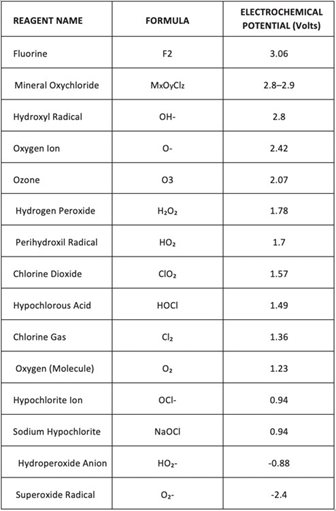
JC 9465 measures 2.8–2.9 V, on par with the electrochemical potential of the hydroxyl radical (2.80 V) and exceeding ozone at 2.07 V. This high oxidation potential is the foundation of its rapid disinfection performance.
Cost advantage
Beyond its performance, JC 9465 offers a substantial economic benefit. Installation and operating expenses represent less than 1% of the cost of conventional ozone systems, making advanced oxidation accessible to a far broader range of growers and processors.
About the approval
With EPA FIFRA registration and USDA Organic certification in hand, JC 9465 is positioned to support both organic and conventional agriculture. The company is headquartered in Walnut Creek, CA.
What FIFRA registration means — and what it does not
Under the Federal Insecticide, Fungicide, and Rodenticide Act, EPA reviews a product's chemistry, toxicology, and supporting data, then registers it for a defined set of uses at defined rates on an approved label. Jenfitch, Inc. obtained that registration for JC 9465 in 2020.
Registration covers the uses printed on that label; it is not a blanket endorsement of the chemistry. A use that is not on the label is not covered, however well the chemistry would perform there.
What does NOP certification mean for you?
The National Organic Program is codified at 7 CFR Part 205, and JC 9465 was certified under it in 2021. A certified operation must document every input, and the certifier needs a document to file rather than a judgment call to make on the spot.
The material can therefore be fed in a certified organic operation without putting the certificate at risk — but list it in your organic system plan and keep the certificate on file. The formulation is unchanged: the same mineral oxychloride chemistry used on conventional acreage.
Why hold both in a mixed packing house?
Few packing houses are purely organic or purely conventional. The same dump tank, flume, hydro-cooler, brush bed, and conveyor run organic fruit on one shift and conventional on the next, through the same water.
A sanitizer cleared only for conventional use forces a second chemistry, a drain and flush, or a scheduling wall between them. Each costs water, labor, and line time. One material cleared on both sides removes the changeover: same setpoint, same pump, one set of records.
Mixed-line sanitation programs usually fail an audit on the record trail, not on the microbiology.
Where does the chemistry fit in production?
- Dump tanks and wash water — the highest-risk transfer point, where one contaminated lot can seed a day's pack.
- Flumes — recirculated water accumulates organic load, so oxidant demand climbs through the shift.
- Hydro-coolers and ice — both contact product directly and stay with it through transport.
- Foliar — 390 mg/L in the 2023 Sawtooth Ag Research vineyard study.
- Soil drench and irrigation — 78 mg/L in that same study.
- Post-harvest surfaces — conveyors, brushes, and clean-in-place circuits.
Why dose to ORP setpoint, not ppm?
The control variable is oxidation-reduction potential in millivolts. A ppm reading tells you how much you added; ORP tells you what the water is actually doing after soil and sugars take their share of the demand.
Survivors track ORP directly: about 300 CFU/100 mL at +200 mV, 36 at +300 mV, 3 at +400 mV, zero at +600 mV. For in-field and post-harvest disinfection, hold +650 to +750 mV and let feed follow real demand instead of a fixed recipe. The ORP reference chart lists other setpoints.
What does the efficacy record show?
Against Salmonella enterica at a 2.0×10⁷ CFU/mL start, the comparison with sodium hypochlorite is direct.
| Treatment | Dose | Log reduction |
|---|---|---|
| JC 9465 | 2 ppm | 6.60 |
| Sodium hypochlorite | 10 ppm | 2.02 |
| Sodium hypochlorite | 100 ppm | 6.49 |
Read the middle row first: five times the dose of hypochlorite gave two logs, and it took 100 ppm to approach what 2 ppm of JC 9465 did. The University of Washington apple work asked the packing-house question instead — whether a contaminated lot transfers organisms to clean fruit during handling. That failure mode is covered in improving food safety and quality.
Where does JC 9450 fit?
When the job is the water itself rather than the crop, JC 9450 is the sibling product: identical chemistry, and like JC 9465 it is certified to NSF/ANSI/CAN Standard 60 for drinking-water treatment chemicals at a maximum dose of 84 mg/L. A food and agriculture program often runs both — JC 9450 on incoming and ice-making water, JC 9465 on product contact.
Frequently asked questions
Is JC 9465 approved for use on certified organic farms?
Yes. It was certified under the USDA National Organic Program (7 CFR Part 205) in 2021, so it can be fed in a certified organic operation. Still list it in your organic system plan and keep the certificate on file — certification covers the material, not your paperwork.
Does EPA registration mean I can use it anywhere in my plant?
No. FIFRA registration authorizes the uses printed on the approved label, at the rates on that label. Registered uses for JC 9465 span crop production, disease and pest control, soil amendment, livestock support, and post-harvest facility processing. Anything not on the label is not covered.
Can I run organic and conventional product through the same wash system?
That is the operational reason for holding both approvals. Because JC 9465 is cleared on both sides, a mixed house runs the same dump tank, flume, and hydro-cooler at one ORP setpoint — no changeover, no drain-and-flush between runs, one set of records.
What ORP should I hold in a post-harvest wash tank?
Hold +650 to +750 mV for in-field and post-harvest disinfection. Surviving counts reach zero at +600 mV in the reference benchmark, and at +700 mV UC Davis Post-Harvest measured a 6-log CFU reduction in under 10 seconds on E. coli and Listeria.
Have a water challenge like this?
Talk to Jenfitch about JC 9465, safety data sheets, or scoping a treatment program for your facility.